Flexible packaging vs rigid packaging are two distinct options that serve different purposes in protecting, showcasing, and delivering products. Flexible packaging is ideal when you aim to save on costs and reduce weight, while rigid packaging is preferable for enhanced protection or a more upscale appearance for your product. Understanding these differences is crucial for selecting the best option for your needs.
The choice of packaging impacts cost, safety, environmental considerations, branding, and overall business operations.
Flexible packaging can lead to cost savings and is more environmentally friendly.
Rigid packaging offers superior protection for products and enhances their visual appeal.
Key Takeaways
Pick flexible packaging to save money and help the environment. It needs less material and makes shipping lighter.
Use rigid packaging if you want strong protection for breakable things. It keeps items safe and makes them look better.
Think about what your product needs. Look at things like how tough it is, how much it costs, and how easy it is for people to use.
Watch for new trends in the industry. Many companies now use lighter, flexible packaging for food and other goods.
Talk to packaging experts like Sunkey Packaging for custom ideas. They can help your brand reach its goals and fit your product’s needs.
Definitions of Flexible and Rigid Packaging
What Is Flexible Packaging
Flexible packaging is used for many things you see every day. It is made from materials that can bend and move. Some examples are bags, pouches, wraps, liners, and rollstock. Groups in the industry say flexible packaging uses paper, plastic, film, or aluminum foil. These materials help keep food, medicine, and other items safe. You can find flexible packaging in snack bags and juice pouches. Some cleaning products also use flexible packaging.
Flexible packaging is special because it uses less material. It can be shaped to fit almost any product. This helps companies save space and lower shipping costs. Flexible packaging keeps products fresh by blocking air and moisture. Many flexible packages have zippers or easy-tear openings. These features make it easy to open and close.
What Is Rigid Packaging
Rigid packaging is made from strong and hard materials. You see it in bottles, jars, cans, and boxes. Rigid packaging uses glass, hard plastics, metal, and thick paperboard. These materials do not bend or change shape. Rigid packaging keeps products safe during shipping and storage.
You often see rigid packaging for things that need more protection. Glass jars keep food safe and fresh. Plastic bottles hold drinks and cleaning products. Metal cans store soup, vegetables, and pet food. Rigid packaging also makes products look nice in stores. Many luxury or gift items use rigid packaging for a fancy look.
Rigid packaging helps you feel sure your product is safe. It stops products from getting crushed or broken. Many types of rigid packaging can be reused or recycled. This helps cut down on waste.
Flexible Packaging vs Rigid Packaging: Key Differences
Materials and Structure
When you look at flexible packaging vs rigid packaging, you notice the materials are different. Flexible packaging uses plastic films like polyethylene and polypropylene, aluminum foil, and coated paper. These materials can bend and fold easily. Rigid packaging uses hard plastics like PET and HDPE, glass, metals like aluminum and tinplate, and thick paperboard. These materials stay stiff and do not bend.
Here is a table that shows the main differences:
Packaging Type | Common Materials | Characteristics |
Rigid Packaging | Hard plastics (PET, HDPE), glass, metals (aluminum, tinplate), thick paperboard | Strong barrier against physical damage, protects from moisture, light, and air exposure |
Flexible Packaging | Plastic films (polyethylene, polypropylene), aluminum foil, coated paper | Often layered for moisture resistance, durability, and extended shelf-life |
Flexible packaging often has layers to keep out air and water. This helps food and other products stay fresh. Rigid packaging gives strong protection and keeps things safe from bumps.
Physical Properties
Flexible packaging vs rigid packaging have different physical properties. Flexible packaging is lighter and takes up less space. You can bend or fold it to fit many shapes. Rigid packaging is heavier and always keeps its shape.
Here is a table to compare their physical properties:
Property | Flexible Packaging | Rigid Packaging |
Weight | Lighter, reducing shipping costs | Heavier, increasing logistics expenses |
Durability | Strong protection but susceptible to punctures | Highly durable, excellent barrier against damage |
Flexibility | Offers flexibility and space-saving benefits | Maintains fixed shape, excellent impact resistance |
Flexible packaging helps save money on shipping because it weighs less. Rigid packaging protects fragile items better. You can use flexible packaging for snacks and pouches. Rigid packaging works well for glass bottles and cans.
Use Cases
Flexible packaging vs rigid packaging are used for different things. Flexible packaging is good for snacks, juice pouches, granola bars, and pet food. It fits many shapes and sizes. You can add zippers or easy-open seals. Rigid packaging is best for things that need strong protection, like glass bottles, metal cans, and boxes for electronics.
Flexible packaging examples: chip bags, protein bar wrappers, stand-up pouches.
Rigid packaging examples: cereal boxes, glass jars, aluminum cans, detergent bottles.
Flexible packaging is popular in food, medicine, and consumer goods. It works for many products and helps brands meet new needs. Rigid packaging is used for fancy goods, drinks, and things that need tamper-evident seals.
Sustainability
You might care about how packaging affects the environment. Flexible packaging vs rigid packaging have different impacts. Flexible packaging ships flat or in rolls. This means fewer trucks are needed, so there is less pollution. It uses less material and energy to make. Rigid packaging, like glass and metal, needs more energy and makes more waste.
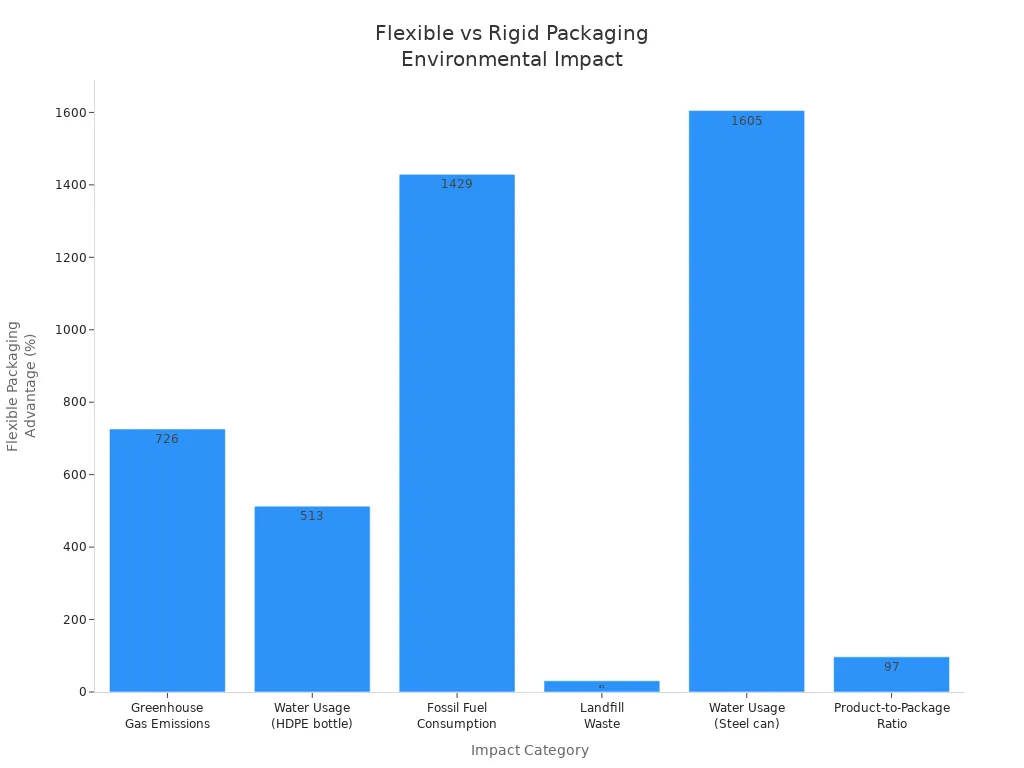
Studies show flexible packaging is better for the environment most of the time. For example, PE-based flexible packaging had lower impacts in 81% of cases. Sunkey Packaging offers recyclable and compostable flexible packaging. You can pick flexible packaging to help your business cut waste and help the planet.
Cost and Production
Cost and speed matter when picking packaging. Flexible packaging vs rigid packaging are different here too. Flexible packaging costs less to make because it uses less material. It is made faster with machines. You can make more packages quickly and use less storage space. Rigid packaging costs more because it uses more material and takes longer to make.
Here is a table to compare cost and production:
Feature | Flexible Packaging | Rigid Packaging |
Lead Times | Faster due to automated production processes | Longer due to complex manufacturing |
Production Scalability | Highly scalable with efficient space use | Less scalable, requires more materials |
Material Requirements | Less raw material needed | More materials required |
Cost Efficiency | Lower costs due to reduced material use | Higher costs due to more complex processes |
Sunkey Packaging helps you save money and time with flexible packaging. You can get your products to stores faster and spend less.
Branding and Shelf Appeal
Branding and shelf appeal are important for your product. Flexible packaging vs rigid packaging give you different choices. Flexible packaging lets you use bright colors, clear windows, and custom shapes. You can add resealable zippers and easy-open tabs. Good printing helps your brand stand out. You can even add QR codes or special features for customers.
Rigid packaging looks fancy and feels strong. It is good for luxury items and products that need to look safe. Rigid packaging keeps its shape and stacks well on shelves.
Here are some ways flexible packaging helps your brand:
Fits product shapes for better shelf appeal.
Allows high-quality printing for strong brand messages.
Adds features like QR codes for customer engagement.
Supports sustainability, which many people like.
Sunkey Packaging offers new designs and printing to help your brand stand out. You can make packaging that gets noticed and builds trust with customers.
Tip: Pick flexible packaging if you want to save money, help the environment, and make eye-catching designs. Pick rigid packaging if you need the best protection and a fancy look.
Pros and Cons of Flexible and Rigid Packaging
Flexible Packaging Advantages
Flexible packaging has many good points. It uses less material than other types. This means you get more product and less packaging. For example, single-serve liquid pouches can have a 97:3 ratio. You ship more product and less packaging. This makes shipping lighter and saves money. You can fit more products in each truck. This helps with logistics and lowers transport costs. Fewer trucks and pallets are needed. This cuts energy use and pollution. Flexible packaging does not need extra filler materials. This makes shipping easier and faster.
Tip: Flexible packaging saves space, cuts costs, and helps the planet.
Flexible Packaging Disadvantages
Flexible packaging has some downsides. It does not protect fragile items as well. Thin films can tear or get holes during shipping. This puts your product at risk. Some flexible packaging uses plastics that cannot be recycled. This can make customers think less of your brand. For expensive or delicate products, flexible packaging may not be safe enough. You might need another option if your product needs strong protection.
Disadvantage | Explanation |
Lack of structural rigidity | Flexible packaging may not protect fragile items like glass bottles. |
Puncture risks | Thin films can tear or get holes during shipping, risking product safety. |
Environmental concerns | Non-recyclable plastics can hurt your brand and the environment. |
Rigid Packaging Advantages
Rigid packaging gives strong protection. It is good for products that must stay safe, like medicine or drinks. Rigid packaging often has tamper-evident systems. These help keep products secure. Some rigid packaging can be resealed or opened easily. This makes it simple for customers to use. Some rigid packaging can be reused. This helps with sustainability. Rigid packaging creates a good experience for users. It works well for sensitive products.
Rigid packaging is easy to treat for safety.
Tamper-evident systems keep products safe.
Resealable features make things easier.
Reusable options help the planet.
Rigid packaging builds trust and satisfaction.
Rigid packaging also helps with premium branding. You can make your product stand out with strong construction and custom designs. Many people see rigid packaging as higher quality. This helps you build trust and attract buyers in luxury markets.
Rigid Packaging Disadvantages
Rigid packaging has some challenges. It costs more to make because it uses more materials. Shipping costs are higher since rigid packaging is heavier and takes up more space. You need more trucks and pallets. This increases your carbon footprint. Rigid packaging is recycled less often. It can cause more harm to the environment than flexible packaging.
Higher costs for making and materials.
More shipping volume and weight.
Bigger environmental impact from less recycling and more emissions.
Note: Think about your product’s needs and your brand’s goals before choosing flexible or rigid packaging.
Choosing the Right Packaging for Your Product
Factors to Consider
You need to think about many things when picking packaging. Every product is different, so the packaging must fit its needs. Here are some important things to help you choose:
Durability: Check if the packaging keeps your product safe during shipping.
Cost-effectiveness: Rigid packaging is heavier and costs more to ship. Lighter packaging can help you save money.
Environmental impact: Some packaging makes less waste and helps your business be greener.
Consumer convenience: Easy-to-use packaging, like pouches, makes your product more attractive.
Design trends: Your packaging should look good and match what shoppers want.
Product size and weight: Rigid packaging is good for heavy or breakable items. Lighter packaging fits small spaces and lowers shipping costs.
Shelf life: Some packaging keeps products fresh longer by blocking air and water.
Tip: Always pick packaging that fits your product and your brand’s goals.
Industry Recommendations
Different industries have their own ways to pick packaging. In food and drinks, many companies now use lighter and flexible packaging. This kind of packaging uses less material and costs less to ship. It also keeps food safe from air and moisture. You can add things like resealable tops and bright designs.
Food products often use lighter packaging for easy shipping and storage.
Rigid packaging is better for drinks and things that need more protection.
Think about how breakable your product is, how long it should last, and if it reacts with the packaging.
Know your customers. Some people care about the environment and want eco-friendly packaging.
Budget is important. Pick packaging that fits your costs for making and shipping.
In the U.S., more brands are choosing lighter packaging, especially for food. Both big brands and store brands like these options for many products.
Custom Solutions from Sunkey Packaging
You can get special packaging made just for your product and brand. Sunkey Packaging has many choices for different industries. You can pick the materials, shapes, and features you want. Sunkey Packaging helps you make packaging that keeps your product safe and supports your brand. They also make sure your packaging meets global rules. If you want your product to stand out, Sunkey Packaging can help you design packaging that looks great and is good for the planet.
Note: Sunkey Packaging works with you to find the best packaging, whether you need strong protection or a special look.
You now know that flexible and rigid packaging are not the same. They use different materials and cost different amounts. Flexible packaging is good because it saves space. It also helps the environment. Rigid packaging is strong and looks fancy. You should pick packaging that fits your product and business goals. Think about what your customers want. Pick the packaging that helps your brand do well and keeps your products safe.
Tip: Always check what your product needs before you choose packaging.
FAQ
What products work best with flexible packaging?
Flexible packaging works well for snacks and coffee. It is also good for pet food and personal care items. This packaging fits many shapes and sizes. It makes storage and shipping simple.
Is flexible packaging better for the environment?
Flexible packaging uses less material and energy. You can ship more products with fewer trucks. This lowers your carbon footprint. Many flexible packaging choices can be recycled or composted.
How does rigid packaging help with product safety?
Rigid packaging gives strong protection to products. It stops things from getting crushed or broken. You often see it used for glass bottles, jars, and electronics.
Can I print custom designs on flexible packaging?
Yes! You can add bright colors and logos. You can even put QR codes on it. Flexible packaging helps your brand stand out in stores.
Does Sunkey Packaging offer custom solutions?
Sunkey Packaging helps you design packaging for your product. You can pick the materials, shapes, and features you want. Your packaging will match your brand and meet global rules.


