You use modified atmosphere packaging to keep food safe and fresh. This packaging changes the air inside the package. It helps slow down food going bad. The process uses special gases and materials. These help your products last longer and taste better. You can see these benefits in many kinds of food packaging. With modified atmosphere packaging, you get these advantages:
It slows microbe growth and spoilage.
It lowers oxidation and controls breathing.
It makes food last longer than regular packaging.
Sunkey Packaging is a leader in making new and eco-friendly packaging for your needs.
Key Takeaways
Modified atmosphere packaging (MAP) changes the air in food packages. It helps keep food fresh and safe for a longer time.
This method uses gases like oxygen, carbon dioxide, and nitrogen. These gases slow down spoilage and stop bacteria from growing.
Active MAP uses machines to add the right mix of gases. Passive MAP lets the food and packaging make the best air naturally.
MAP works well for fresh produce, meat, dairy, bakery items, and ready meals. It helps food last longer and cuts down on food waste.
Strong seals and the right packaging materials, like barrier films, are very important. They keep the special air inside and protect the food’s quality.
MAP helps keep food’s color, taste, and texture without extra preservatives. This makes it a healthier choice.
Using MAP can save money by cutting food waste. It keeps products fresh for more time.
Sunkey Packaging offers eco-friendly and custom MAP solutions. These work for food, medicine, and daily chemical products.
Principles Of Modified Atmosphere Packaging
What Is Modified Atmosphere Packaging
You use modified atmosphere packaging to keep food fresh longer. This technology changes the air inside the package. It lowers oxygen and adds gases like carbon dioxide and nitrogen. These changes slow spoilage and help keep food safe. You can find this method in many types of packaging. It works well for fruits, vegetables, meat, and baked goods. Using modified atmosphere packaging helps cut down food waste and makes products better.
Modified atmosphere packaging systems are popular because they keep food fresh, cut waste, and make food safer.
Here is a table showing the main gases used and what they do:
Gas Type
Role in MAP
Oxygen (O₂)
Keeps color and helps breathing
Carbon Dioxide (CO₂)
Stops germs from growing
Nitrogen (N₂)
Adds space and keeps things steady
How It Works
You follow a few easy steps with modified atmosphere packaging machines. Each step helps make the right air for your food.
Product preparation: You put food in the right container. This could be a tray, pouch, or wrap.
Air removal: The machine takes out normal air from the package. Sometimes it uses a vacuum or removes some air.
Gas flushing: The machine adds a special mix of gases. The mix depends on what you pack and how long you want it to last.
Sealing: The package is sealed right away. This keeps the new air inside and blocks outside air.
These steps help your food stay fresh and safe. The seal matters a lot. If air gets in, food can spoil fast.
Active Modified Atmosphere Packaging
Active modified atmosphere packaging gives you more control over the air inside. You do not just let the food or package change the air. Machines remove air and add the right mix of gases. This method keeps food fresh much longer.
You get many benefits with active modified atmosphere packaging. It can make shelf life 50 to 400 percent longer. It also keeps food looking and tasting good. You do not need as many preservatives. The right gases can stop bacteria from growing. For example, more carbon dioxide slows spoilage bacteria.
Here is a table showing how active modified atmosphere packaging helps:
Evidence
Description
Shelf Life Extension
MAP can make shelf life 50 to 400% longer and cut losses from spoilage.
Quality Maintenance
It makes food look better and last longer.
Microbial Inhibition
High CO₂ levels (30-60%) stop spoilage bacteria, especially Pseudomonas.
Controlled Atmosphere
MAP controls chemical and germ actions to keep food from going bad.
You use active modified atmosphere packaging for the best shelf life and quality. This method works well for meat, cheese, and fresh produce. You can trust this system to keep your products safe and nice.
Passive Modified Atmosphere Packaging
You can use passive modified atmosphere packaging to keep your food fresh without using machines to change the air inside the package. This method lets the food and the packaging film work together. The food breathes, and the film controls how much air goes in and out. Over time, the right mix of gases forms inside the package. This helps slow down spoilage and keeps your food safe.
You often see passive MAP used for fruits and vegetables. These foods keep breathing after harvest. The packaging film lets oxygen and carbon dioxide move in and out at a steady rate. You do not need to add special gases. The package creates the best atmosphere by itself.
Passive MAP works best when you match the film to the food. Here are some things you should know:
High-respiration foods like strawberries and broccoli need films that let more air pass through. This stops the food from running out of oxygen and getting damaged.
Low-respiration foods like apples and citrus fruits need films that block more air. This helps keep the right mix of gases inside.
Temperature changes can affect how fast food breathes and how much air the film lets through. If the temperature goes up or down, the package might not work as well.
You can see the main differences between active and passive MAP in the table below:
Aspect
Active MAP
Passive MAP
Mechanism
You use machines to replace the air with a special gas mix.
You let the food and film create the right air mix naturally.
Techniques Used
Gas flushing, oxygen scavengers, desiccant packs, one-way valves.
You get longer shelf life by removing oxygen and adding safe gases.
You extend shelf life by controlling how much air moves in and out.
Applications
Best for foods that need exact gas control, like fresh produce.
Best for foods that breathe or do not need strict gas control.
Tip: You can combine passive MAP with active MAP for even better results. Many companies use both methods to get the best shelf life and food quality.
Passive MAP gives you a simple way to keep food fresh. You do not need special machines. You just need the right packaging film for your product.
Gases And Materials In MAP
Common Gases Used
You need to know which gases are important in modified atmosphere packaging. Each gas helps make the best air for your food. You use a mix of gases to keep food fresh and safe. Here are the main gases you use:
Oxygen (O₂): This gas keeps food’s color and taste. High oxygen helps red meat stay bright and fresh. Oxygen also stops bad bacteria that grow without air.
Carbon Dioxide (CO₂): You add this gas to slow bacteria and mold. It helps cheese, meat, and baked goods last longer.
Nitrogen (N₂): You use nitrogen to fill space in the package. It keeps the air inside steady and blocks outside smells.
You often use gas flushing to add these gases in the right amounts. This helps you get the best results for each food.
Carbon Dioxide
You use carbon dioxide to stop food from spoiling. It slows down bacteria and mold. You see this gas in packages for cheese, meat, and bakery foods. Gas flushing lets you control how much carbon dioxide goes in.
Nitrogen
You use nitrogen as a filler gas. It does not react with food. Nitrogen keeps the package from caving in and protects taste and texture. You use nitrogen in snacks and with vacuum skin packaging. Thermoforming map packaging machines add nitrogen during packing.
Oxygen
Some foods need oxygen. It keeps red meat bright and helps fruits and veggies breathe. You control oxygen with gas flushing and oxygen scavengers. This keeps food safe and fresh. Thermoforming map packaging machines help you set the right oxygen level.
Packaging Materials
Barrier Films
You pick barrier films to keep the right air inside. These films block air and water. Some films have tiny holes for foods that need to breathe, like strawberries. Others block more air for foods that need less. You can use multi-layer films, micro-perforated films, or two-part cardboard with oxygen scavengers. Sunkey Packaging makes strong films that protect food and help the planet.
Packaging Type
Description
Key Features
Biaxially Oriented Polyethylene Film
For respiring produce
Perforations for gas exchange, high CO₂ transmission rate
Perforated inner layer, oxygen absorber, gas barrier
Integrated Atmosphere Modifier Packets
For fruits and vegetables
Absorbs oxygen, generates CO₂, breathable material
Micro-Perforated Packaging
For respiration-prone produce
Adjusts gas composition, prevents anaerobic respiration
Sealing Technology
You need strong seals to keep the special air inside. Thermoforming map packaging machines and vacuum machines seal packages tight. Good sealing keeps the package strong. You can also use vacuum skin packaging for a close fit and extra safety. Sunkey Packaging uses smart sealing to keep your products safe.
Sunkey Packaging Solutions
You can count on Sunkey Packaging for new and green packaging. Sunkey uses strong materials and smart sealing to keep food fresh. You get custom packaging for food, medicine, and daily chemicals. Sunkey’s packaging helps with quality, safety, and the environment. You get help from their research and global standards. Sunkey Packaging helps you pick the best option for your business.
Benefits For Shelf Life And Quality
Extending Shelf Life
You want your food to stay good for a long time. Modified atmosphere packaging helps by changing the air inside the package. Gas flushing takes out most oxygen and adds carbon dioxide and nitrogen. This slows spoilage and keeps your food safe. Active modified atmosphere packaging is best for foods needing strict control. Passive modified atmosphere packaging works well for foods that breathe, like fruits.
Here is a table showing how this technology helps:
Benefit
Description
Extended Shelf Life
Less oxygen and balanced CO₂ help food last much longer than regular packaging.
MAP keeps color, texture, and flavor by slowing oxidation and stopping moisture loss.
Waste Reduction
Longer shelf life and fresher products mean less food waste.
Cost Savings
MAP packaging saves money and helps manage inventory better.
Modified atmosphere packaging gives you more than just longer shelf life. It also saves money and keeps food looking and tasting good.
Preserving Freshness
Freshness matters when you buy or sell perishable foods. Modified atmosphere packaging keeps food fresh by lowering oxygen and adding the right gases. This slows oxidation, which can make food lose color and taste. It also protects food from moisture and outside air.
You can use this technology for many foods:
Meats
Fruits
Vegetables
Dairy products
Coffee beans
Cheese
Fresh pasta
Ready meals
Seafood
You get the best results with strong packaging and oxygen scavengers. These features keep the right air inside. You can trust this method for keeping food safe and fresh.
Reducing Food Waste
You want to waste less food. Modified atmosphere packaging helps by making food last longer and stay fresh. Gas flushing and good packaging slow spoilage and keep food safe for more time. This means you throw away less food at home and in stores.
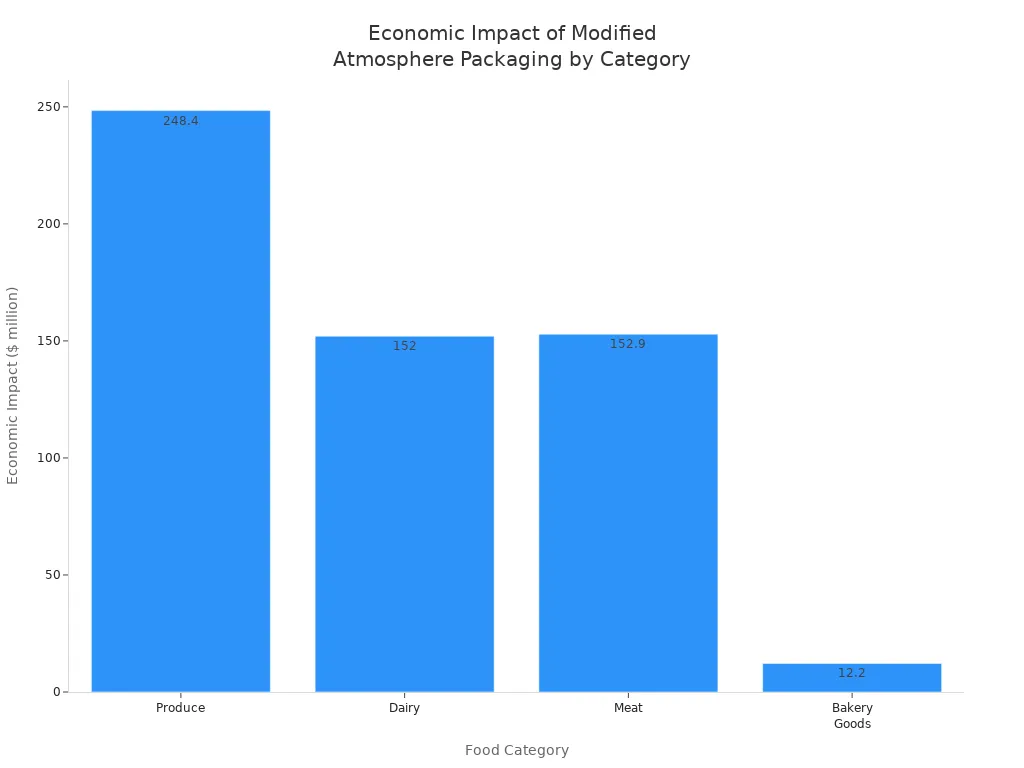
Here is a chart showing how reducing food waste helps different foods:
Produce, dairy, and meat benefit the most. Using modified atmosphere packaging helps the environment and saves money. It also makes sure more people get fresh food.
Tip: Choosing the right packaging protects your food from spoilage and reduces waste. This helps everyone, from farmers to families.
Enhancing Safety
You want your food to be safe from germs and spoilage. Modified atmosphere packaging helps by changing the air inside the package. This method uses gases like nitrogen, oxygen, and carbon dioxide. These gases make the package safer for your food.
When you lower oxygen, food goes bad more slowly. This stops browning, fat going bad, and germs growing. High carbon dioxide can stop bacteria, molds, and other germs like Pseudomonas spp.. Carbon dioxide gets inside bacteria and changes how they work. This makes it harder for germs to grow. Your food stays safe for a longer time.
Note: Using both high oxygen and high carbon dioxide helps fight more germs. It works on bacteria that need air and those that do not. This keeps your food safe from many kinds of germs.
You can make food even safer by doing more things. These steps include:
Keep food cold, under 3°C, to slow germs.
Lower water activity below 0.92, so germs cannot grow well.
Make pH lower than 4.5, which is hard for bad germs.
Add safe preservatives, like nitrite, to slow dangerous germs.
MAP helps stop spoilage, but some bad germs can still grow. These germs are E. coli, Salmonella, Listeria, and Clostridium botulinum. Sometimes, food looks and smells fine but still has germs. You must keep MAP foods cold and use other safety steps.
Here is a quick list of how MAP makes food safer:
Slows spoilage and keeps food fresh.
Stops many bacteria and molds from growing.
Works best with cold storage and other safety steps.
Helps you trust the food you buy and eat.
You get longer shelf life and better food safety with modified atmosphere packaging. This technology helps you feel safe and protects your health.
Drawbacks And Challenges
Cost Factors
Modified atmosphere packaging costs more than regular packaging. You need special materials to keep food fresh. These materials can cost a lot. You also use more energy when making the packages. You must buy machines for gas flushing and vacuum skin packaging. These machines help control the air inside each package. The table below shows the main cost factors:
Cost Factor
Description
High costs of packaging materials
MAP materials can be more expensive than regular packaging.
High energy consumption
MAP production uses more energy, raising costs.
High capital investment
You need to buy special machines for MAP.
You should plan your budget before you switch to MAP. You may save money later by wasting less food.
Quality Issues
You want your food to stay safe and fresh. Sometimes, MAP can cause problems with quality. If you use the wrong mix of gases, food may lose color or taste. You must seal each package tightly. If air leaks in, food can spoil fast. Vacuum skin packaging seals food close to the product. You also need to check the packaging materials. Some films may not block enough air or moisture. You must match the film to the food type. Fruits need films that let them breathe. Meat needs films that block air and keep it fresh.
You can avoid quality problems by using strong materials. Check your machines often. Gas flushing helps control the air inside each package. Test your products to make sure they stay fresh.
Environmental Impact
You may worry about the environment when you use packaging. MAP offers some benefits for nature. You use natural gases like oxygen, nitrogen, and carbon dioxide. These gases go back into the air when you open the package. You do not need chemical preservatives, which can harm water and wildlife. MAP uses less energy than canning or freezing. You help protect animals and plants by using fewer chemicals from petroleum.
Here are some ways MAP helps the environment:
Less need for chemical preservatives
Use of natural gases
Energy efficiency
Support for biodiversity
You can pick eco-friendly materials and recycle your packaging. You help the planet and keep your food safe.
Technical Challenges
You face several technical challenges when you use modified atmosphere packaging (MAP). Each step in the process needs careful attention to detail. If you want the best results, you must understand these challenges and how they affect your products.
You must choose the right gas mixture for each product. The mix depends on things like pH, water activity, fat content, and the natural microflora of the food. If you use the wrong mix, your food may spoil faster or lose quality.
You need to keep the temperature steady. MAP works best when you combine it with proper refrigeration. If the temperature goes up or down, bacteria can grow, and the package may not protect your food as well.
You must start with high-quality products. MAP cannot fix food that is already spoiled or damaged. If you use poor-quality food, the packaging will not help.
You need to invest in the right equipment and materials. This includes machines for gas flushing, sealing, and quality control. You also need to train your staff to use the equipment correctly.
You may need to change your production flow and logistics. MAP can require new steps in your process, which can slow things down or make them more complex.
Note: The seal on your package is very important. If the seal fails, oxygen and other gases can get inside. This can make the food spoil quickly. Seals can fail if there is contamination, equipment problems, or material defects. You should check your seals often and keep your machines in good shape.
You also need to think about the cost of gases, packaging materials, and equipment. Training your team and keeping up with maintenance adds to the challenge. You must balance these costs with the benefits of longer shelf life and better food safety.
Here is a quick checklist to help you manage technical challenges in MAP:
Pick the right gas mix for each product.
Keep the temperature steady during storage and transport.
Use only high-quality food for packaging.
Invest in good equipment and regular maintenance.
Train your staff well.
Check seals and packaging for leaks or defects.
You can overcome these challenges with careful planning and attention to detail. When you do, you get the most out of modified atmosphere packaging and keep your products safe and fresh.
Best Products For MAP
Fresh Produce
Modified atmosphere packaging is common for fresh produce. Fruits and vegetables keep breathing after they are picked. This is called respiration. Changing the air inside the package helps control this. Less oxygen and more carbon dioxide slow down spoilage. This keeps fruits and veggies crisp and colorful for longer.
Fresh fruits and vegetables can spoil fast because they breathe a lot. Packaging that changes oxygen and carbon dioxide helps stop decay. It also keeps food safe from germs that can grow on fresh foods. The main gases used are oxygen, carbon dioxide, and nitrogen. These gases work together to keep produce fresh.
Type of Produce
Benefits from MAP
Fresh Produce
Benefits from reduced oxygen and increased carbon dioxide concentrations to extend shelf life.
Meat and Meat Products
Improved preservation through modified gaseous atmospheres.
Seafood
Enhanced freshness and quality retention.
Dairy Products
Extended shelf life and quality preservation through atmosphere modification.
Vacuum skin packaging works well for berries, leafy greens, and cut fruits. This method keeps air out and helps stop spoilage.
Fresh fruits and vegetables can get germs after picking.
MAP changes gas levels to keep food safe and fresh.
The main gases used are oxygen, carbon dioxide, and nitrogen.
Meat And Poultry
You want meat and poultry to stay safe and taste good. Modified atmosphere packaging helps with this. Most of the oxygen is removed from the package. This stops bacteria from growing and slows fat from going bad. The right mix of gases keeps meat’s color and flavor longer.
MAP helps raw chicken, beef, and sausages last longer. Vacuum skin packaging seals meat close to the tray. This keeps air out and locks in freshness. It also stops water vapor from forming, which helps prevent spoilage.
Aspect
Details
Microbial Stability
MAP reduces and stabilizes bacteria counts.
Oxidative Stability
MAP lowers fat oxidation and keeps meat tasting fresh.
Shelf Life Extension
MAP helps you keep meat and poultry safe for longer.
MAP removes oxygen to stop food from spoiling.
Other gases replace oxygen to slow bad changes.
You keep meat fresh and safe for customers.
Dairy Products
You can use modified atmosphere packaging for many dairy foods. Cheese, yogurt, and cream all benefit from this method. Changing the air inside slows mold and bacteria growth. This keeps dairy tasting fresh and safe to eat.
Dairy needs packaging that blocks air and moisture. Special films and sealing methods protect the food. MAP helps keep the right texture and flavor in cheese and other dairy. You also make the shelf life longer, so less food is wasted.
MAP helps dairy foods last longer.
You keep taste and quality high.
Special packaging protects against spoilage.
Tip: Pick the right packaging and gas mix for each food. This helps you get the best results and keeps your products safe.
Bakery Items
You want your bakery foods to stay soft and tasty. Modified atmosphere packaging helps by changing the air inside the package. This works for bread, cakes, and pastries. Your baked goods can stay moist for days.
Bakery foods go bad fast because of mold and staling. If you take out oxygen and add nitrogen, you slow these problems. You do not need extra preservatives, which many people like. People want simple ingredients on labels.
Here is how modified atmosphere packaging helps bakery foods:
It stops mold by taking away oxygen.
It keeps bread soft and stops it from getting hard.
It makes shelf life longer, from days to weeks or months.
It lets you sell food without fake preservatives.
You can use this for sliced bread, rolls, tortillas, and sweet snacks. The right package keeps air and water out. This keeps your bakery foods fresh and safe.
Ready Meals
Ready meals are popular because they save time. These meals have meat, veggies, and grains. They spoil fast if not packed well. Modified atmosphere packaging helps keep these meals fresh and safe.
This packaging changes the air to slow down spoilage. You can keep ready meals longer without losing taste. This helps you waste less food and save money.
Some good things about using modified atmosphere packaging for ready meals are:
Longer shelf life, so meals stay fresh more days.
Less food waste, which saves money and helps nature.
Safer food, because germs cannot grow as easily.
You see this packaging for pasta, rice bowls, and full dinners. The package keeps flavors in and blocks outside air.
Tip: Keep ready meals cold for the best results with modified atmosphere packaging.
Sunkey Packaging Applications
You can trust Sunkey Packaging for many types of products. Sunkey makes special packaging for food, medicine, and industry. The company works with big brands and follows safety rules.
Here is a table showing how Sunkey Packaging uses modified atmosphere packaging for different products:
Sector
MAP Solution Type
Fresh fruits and vegetables
Passive MAP
Snack foods (chips, nuts)
Active MAP
Fresh meat and poultry
Active MAP
Ready-to-eat salads
Active MAP
Dairy products and cheeses
Active MAP
Sunkey Packaging helps you pick the best package for your food. The company knows how to pack meat, dairy, and bakery foods. You get safe, high-quality, and earth-friendly packaging from Sunkey.
Applications And Industry Use
MAP In Food Industry
You see modified atmosphere packaging in many food businesses. It helps keep fruits, vegetables, meats, dairy, and baked goods fresh. Active modified atmosphere packaging lets you control the air inside the package. This is good for foods that spoil fast. Passive modified atmosphere packaging works for foods that breathe, like fresh produce.
Many companies pick this technology for several reasons:
Products last longer on the shelf
Food looks nice and stays fresh
No need for chemical preservatives
Flavors stay strong
Food keeps its nutrients
This packaging can cost more and needs special machines. You also have to check quality often. Even with these problems, many brands use it to keep food safe and tasty.
MAP In Pharmaceuticals
You use modified atmosphere packaging to protect medicines. It keeps pills, powders, and other products safe from harm. This method stops moisture, air, and germs from getting inside. Medicines stay safe and work well for a long time.
This technology helps with quality control. It blocks things that could hurt the medicine. You see it used for tablets, capsules, and some medical devices. The right packaging helps you follow strict safety rules in medicine.
MAP In Daily Chemicals
You also find modified atmosphere packaging for daily chemicals. These are things like cleaning powders, detergents, and personal care items. You want these products to stay dry and not get clumpy. This packaging keeps out moisture and air, so products last longer.
You can use this for both powders and liquids. It helps keep the quality high and the product safe. Many brands use this technology to protect their products during shipping and storage.
Tip: If you pick the right packaging for your industry, your products stay fresh, safe, and ready for customers.
Sunkey Packaging Case Studies
You can learn how Sunkey Packaging uses modified atmosphere packaging (MAP) in real projects. These stories show how MAP helps solve problems in many industries. Sunkey works with big brands and always wants high quality and green solutions.
1. Fresh Produce: Keeping Strawberries Fresh
You want strawberries to stay fresh from the farm to the store. Sunkey Packaging helped a big fruit exporter in China. The company needed to send strawberries far away without losing quality. Sunkey made a special passive MAP pouch with micro-perforated barrier film. This film let the strawberries breathe but did not let in too much oxygen. The strawberries got to the store looking bright and firm. The exporter had over 30% less spoilage. You can trust this packaging to keep your fruit safe and fresh.
2. Meat and Poultry: Extending Shelf Life for Retailers
A supermarket wanted to sell fresh chicken for more days. Sunkey Packaging made an active MAP tray with a strong film and tight seal. The package used carbon dioxide and nitrogen gases. This stopped bacteria and kept the chicken moist. The store saw shelf life go from 5 days to 12 days. You can use this idea to waste less food and keep meat safe for shoppers.
You need to keep medicines safe from air and water. Sunkey Packaging worked with a medicine company to pack tablets that break down fast. Sunkey used a multi-layer film that blocks oxygen and moisture. The MAP process took out air and sealed the tablets in a safe place. The company met strict world rules and kept the medicine good for longer. You can trust this packaging for sensitive products.
4. Daily Chemicals: Preventing Clumping in Detergents
A big brand wanted to stop its powdered detergent from clumping during shipping. Sunkey Packaging gave them a MAP pouch with a special barrier film. The film blocked water and kept the powder dry. The detergent stayed loose, and the brand got fewer complaints. You can use this way to protect daily chemical products.
Note: Sunkey Packaging always uses eco-friendly materials and follows world standards. You get packaging that is safe for your products and better for the earth.
Industry
MAP Solution Type
Key Benefit
Fresh Produce
Passive MAP pouch
Reduced spoilage
Meat & Poultry
Active MAP tray
Longer shelf life
Pharmaceuticals
Multi-layer MAP film
Product stability
Daily Chemicals
Barrier MAP pouch
Moisture protection
You can see that Sunkey Packaging has answers for many industries. The company cares about quality, new ideas, and the planet. This helps you reach your goals and keep your products safe.
Safety And Regulations
Consumer Safety
You want to make sure your food stays safe when you use modified atmosphere packaging. You need to follow important steps to protect yourself and others. Here are some key safety measures you should know:
You must monitor the gas mix inside each package. This helps keep the right balance of gases for your food.
You need to control the temperature at all times. Cold storage stops harmful bacteria from growing.
You should check the packaging for leaks or damage. A strong seal keeps out germs and dirt.
You must watch for signs of bacteria. Regular checks help you spot problems before they reach your table.
These steps help you keep food safe and fresh. You lower the risk of spoilage and protect your health.
Regulatory Standards
You must follow strict rules when you use modified atmosphere packaging. Food safety agencies set these rules to protect you and your family. You need to use approved gases like oxygen, carbon dioxide, and nitrogen. You must also use packaging materials that meet safety standards.
You should label each package with the right information. This includes the type of food, the date it was packed, and how to store it. You need to keep records of your packaging process. This helps you show that you follow the rules if someone checks.
Sunkey Packaging always meets global standards. You can trust their packaging to keep your products safe and follow the law.
Common Misconceptions
Some people think modified atmosphere packaging makes food safe no matter what. This is not true. You still need to handle and store food the right way. Here are some common misunderstandings:
MAP can hide signs that food has spoiled. You might not see or smell anything wrong, but the food could still be unsafe.
Some bacteria can grow even in cold and low-oxygen places. You must keep food cold and use it before the date on the package.
Certain fish products can let dangerous bacteria grow in MAP. You need to follow special rules for these foods.
Tip: Always check the package and follow storage instructions. When in doubt, do not eat food that looks or smells strange.
You play a big part in keeping food safe. By following these tips and using trusted packaging, you help protect yourself and others.
Now you know how modified atmosphere packaging helps food stay fresh and safe. This method changes the air inside packages. It slows down food going bad and makes shelf life longer. You get better food quality and throw away less. Sunkey Packaging is a top company for these smart packaging solutions. If you want to protect your products and get better results, you should pick this packaging for your business.
FAQ
What foods work best with modified atmosphere packaging?
You can use modified atmosphere packaging for many foods. It works well for fresh produce, meat, dairy, bakery items, and ready meals. This method helps keep these foods safe and fresh for a longer time.
Is modified atmosphere packaging safe for you?
Yes, you can trust modified atmosphere packaging. It uses natural gases like oxygen, nitrogen, and carbon dioxide. These gases are safe for food and do not hurt your health.
How does modified atmosphere packaging help reduce food waste?
This packaging makes food last longer. Food stays fresh, so you throw away less. Stores and homes both waste less food and have fewer expired products.
Can you recycle modified atmosphere packaging materials?
Some packaging materials can be recycled. You should check the recycling symbols on the package. Sunkey Packaging has eco-friendly options to help protect the environment.
Does modified atmosphere packaging change the taste of food?
No, you keep the natural taste and texture of your food. The packaging slows spoilage without adding chemicals or changing flavors.
How do you know if the package is still sealed properly?
You should look for a tight seal and no damage. If you see air bubbles or broken seals, do not use the product. Always check the package before opening.
What makes Sunkey Packaging different from other companies?
Sunkey Packaging gives you custom solutions, strong materials, and eco-friendly choices. You get packaging that meets global standards and keeps your products safe and fresh.
Select your packaging needs by filtering through our comprehensive categories. If you don't find what you're looking for, feel free to contact us for custom solutions.