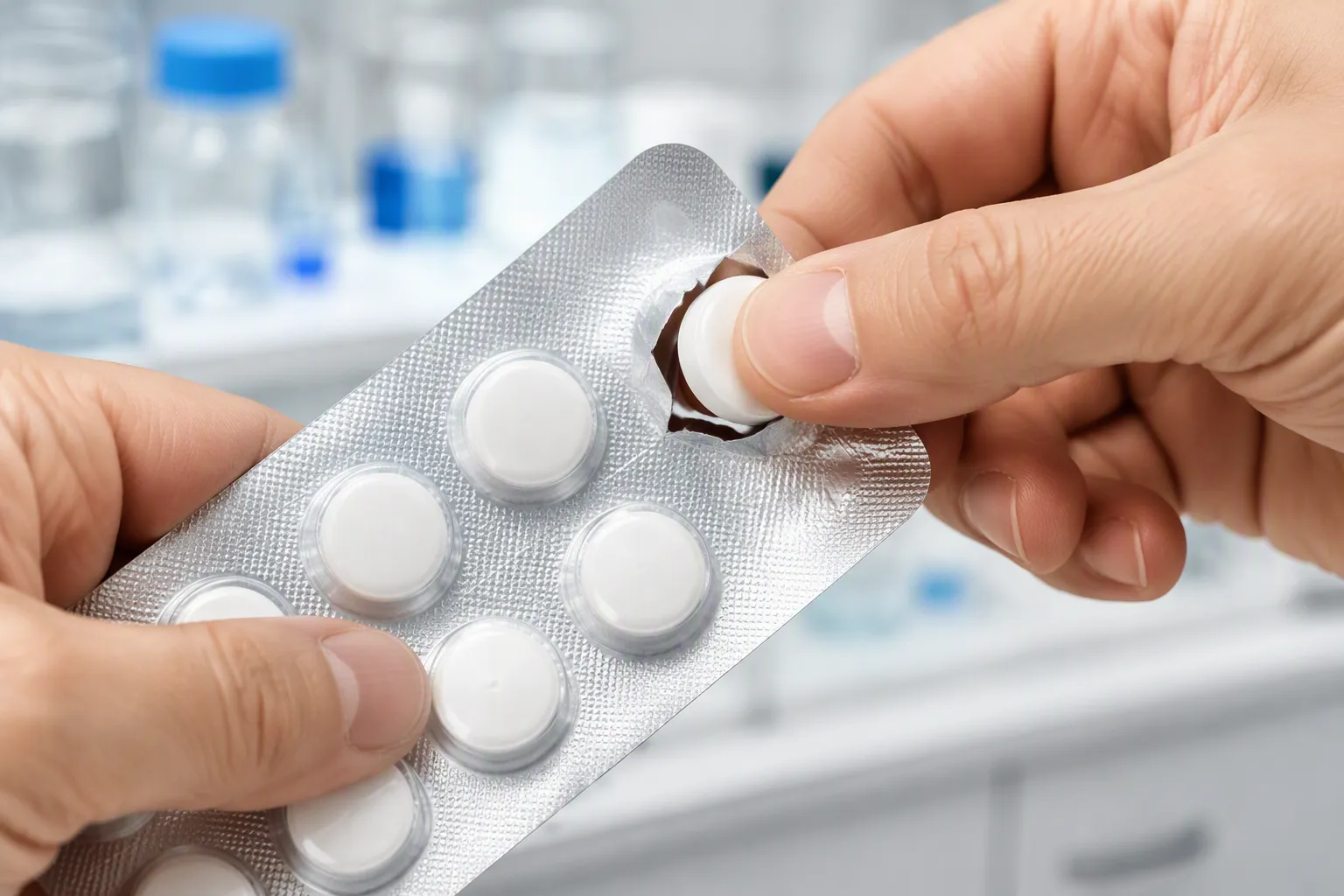
Imagine pushing a pill through a blister pack. That simple action uses PTP aluminum foil. It is the heat-sealable cover that seals the space in medicine blister packs. This foil protects your medicine from moisture, oxygen, and light. Because it forms a barrier, PTP aluminum foil directly supports drug stability and patient safety. It also ensures dose accuracy by keeping each dose separate until you need it. In modern pharma packaging, this material is essential.
Key Takeaways
PTP aluminum foil seals medicine blister packs. It keeps out moisture, oxygen, and light. This keeps drugs stable and safe.
The foil has three layers. The aluminum core keeps out moisture and gases. The outer layer holds printed details. The inner layer closes the blister pack.
PTP foil offers strong protection against outside elements. Its water vapor transmission rate remains below 0.5 g/m²·24h. Oxygen transmission is almost zero.
Puncture resistance stops accidental tears. The foil can handle at least 3.5 N of force. This lowers damage during shipping.
Standard PTP foil works well for drugs that stay stable. It costs less and works quickly. High-barrier cold-form foil protects medications that are sensitive.
Choosing the right foil takes stability tests. Match the foil's protection to how sensitive the drug is. Check supplier approvals, such as ISO 15378.
Work with a certified manufacturer for quality. Certifications help ensure steady performance. Custom printing adds drug details and safety features.
Defining PTP Aluminum Foil in Pharmaceutical Blister Packaging
Before you can appreciate why this material matters, you need to understand what it actually is. PTP aluminum foil serves as the lidding component in blister packs. It is not the blister itself. The foil forms the flat backing that seals each cavity closed. When you press a tablet through the pack, you push it through this foil layer.
What Does Press Through Packaging Mean?
The acronym PTP stands for Press-Through Packaging. This name describes the entire system design. A rigid plastic sheet forms small pockets or cavities. Each cavity holds one dose of medication. A thin aluminum foil seals the flat side of that sheet. The user presses the flexible cavity from below, and the tablet pushes through the foil on the opposite side.
PTP stands for Press-Through Packaging, a design that allows easy access to individual doses while providing a barrier against moisture, light, and contamination.
This packaging concept serves two purposes at once. It protects each dose until the moment of use. It also gives you quick, hygienic access without touching the medicine directly.
Push-Through Mechanism Explained
The push-through mechanism relies on a simple physical action. You place your thumb on the blister cavity. You apply gentle pressure. The tablet inside moves toward the foil backing. The foil punctures cleanly, and the dose drops into your hand.
Several layers work together to make this action reliable:
Printing layer: This outer surface carries drug information, branding, and batch numbers for identification.
Aluminum foil substrate: This middle layer provides the barrier against moisture, oxygen, and light that keeps the drug stable.
Heat-seal coating: This inner layer bonds securely to the plastic cavity under heat, forming a sealed unit that still allows puncture when pressed.
The foil thickness typically ranges from 20 to 25 micrometers for the base layer. That thickness balances two needs. The foil must resist accidental puncture during handling. Yet it must yield easily when you intentionally press a dose through.
Parameter
Value / Description
Mechanism
Pressing the blister cavity with a finger pushes the tablet through the foil backing
Foil thickness
20–25 μm (typical base layer)
Heat-seal coating
Melts under heat/pressure to bond foil to plastic cavity
Puncture resistance
Controlled to allow easy push-through while maintaining seal integrity
Barrier properties
Impermeable to moisture, oxygen, light, and microbes
This controlled puncture resistance gives the packaging its easy press-through function. You get reliable access without needing scissors or tools.
Common Drug Formats Using PTP
You will find press through packaging across many common medication formats. Tablets and capsules appear most frequently. Over-the-counter pain relievers, prescription antibiotics, and daily vitamins all use this format. The single-dose design suits medications taken once or multiple times per day. Each cavity holds exactly one dose, which helps you track whether you have taken your medicine.
Role of PTP Foil as a Lidding Material
Within pharmaceutical blister packaging, the foil acts as the lid. The plastic sheet forms the bottom and sides of each cavity. The foil closes the top. Together, these two components create a complete protective enclosure for each dose.
Sealing with Forming Films
The sealing process joins foil to the plastic forming film. Manufacturers apply heat and pressure to the heat-seal coating. This coating melts and bonds the foil to the cavity sheet. The bond must be strong enough to stay intact during shipping and storage. It must also release cleanly when you press a dose through.
Sunkey Packaging's PTP solution uses a PET/AL/PET composite structure. This multi-layer design enhances heat-sealing performance. The outer PET layers provide printability and protection. The aluminum core delivers the barrier. This structure heat-seals to form individual blister units that maintain their integrity over time.
Primary Protection Function
The foil's main job is protection. It stands as the primary barrier between the drug and the outside world. Without this layer, moisture and oxygen would reach the medication and degrade it quickly.
Barrier against moisture and oxygen: The aluminum layer blocks water vapor and gases completely, including oxygen.
Leak proof: The sealed unit prevents any contents from escaping.
Pollution proof: External contaminants cannot enter the sealed cavity.
Light proof: The opaque foil shields light-sensitive drugs from degradation.
This barrier protection directly extends the shelf life of medications. Drugs stay potent longer because they never encounter the elements that break them down. For pharmaceutical companies, this means fewer product losses and longer expiration dates. For patients, it means reliable medication that works as intended every time.
The foil also prevents contamination between doses. Each cavity remains sealed until you open it. This design keeps every tablet or capsule clean and safe to consume.
Anatomy of PTP Aluminum Foil: Layers and Functions
Every sheet of PTP aluminum foil you see on a pharmacy shelf has three layers that work together. Each layer has its own job. Knowing this structure helps you see why this material works so well for medicine packaging.
Base Layer: Aluminum Foil Core
The aluminum core sits in the middle of the foil. This layer gives the main barrier that makes press-through packaging good at protecting drugs.
Thickness and Purity Standards
Makers choose foil thickness based on what the package needs. The core must bend easily but stay strong. Thicker foil protects more but is harder to push through. Thinner foil pushes through easily but may not be as tough. Sunkey Packaging uses a PET/AL/PET build, where the aluminum layer blocks moisture and gases while the PET layers allow printing and add protection.
Barrier Against Moisture and Gases
The aluminum core blocks moisture and gases very well. Its water vapor transmission rate stays below 0.01 g/m²·24h. Its oxygen transmission rate is nearly zero. These numbers beat standard PVC sheets by a lot. This strong moisture barrier keeps humidity away from your medicine. The foil also blocks all light, which protects drugs that break down when exposed to it.
Layer
Primary Function
Aluminum Core
Blocks moisture, oxygen, and light; adds strength
Heat Seal Coating
Bonds with forming film; keeps seal stable
Printing/Protective Layer
Shows branding and dosage info; resists chemicals
Outer Coating: Print Primer and Lacquer
The outside of the foil has a primer and a protective lacquer. These coatings do more than just look good.
Enabling Custom Printing and Branding
The primer stops the aluminum from oxidizing. Oxidation would ruin print quality. This coating also helps ink stick better. After the primer preps the surface, makers apply high-precision printing. You see drug names, brand logos, and anti-counterfeit marks on this outer layer. The lacquer then guards the printed ink from scratches or peeling during handling.
Heat Resistance During Sealing
The outer lacquer must handle the heat from the sealing process. It keeps the outer ink away from the inner adhesive. This separation stops medicine contamination. The lacquer also stops foil oxidation and wear, which raises the overall product quality.
Inner Heat-Seal Coating
The inner side of the foil has a heat seal lacquer (HSL). This coating faces the medicine cavity and bonds with the forming film.
Types of Sealants Used
Heat seal lacquer allows sealing with PVC, PVDC, or other blister film materials. The coating weight usually falls between 3 and 7 gsm. This range lets makers adjust seal strength for different drug types and patient needs.
Ensuring Push-Through Functionality
The heat seal coating bonds the foil to the blister film. It gives stable sealing and good peel strength. These traits create reliable package integrity. When you press a tablet through the pack, the coating allows a clean break while keeping the seal intact before use. The coating must balance two needs: strong enough to guard the dose, yet soft enough for easy opening.
Property
Typical Value
Water Vapor Transmission Rate
< 0.01 g/m²·24h
Oxygen Transmission Rate
Approaches 0 cm³/m²·24h
This three-layer design gives PTP aluminum foil its great performance. Each layer adds to the final product you trust with your medicine.
How PTP Foil Works in the Sealing Process
Understanding how PTP aluminum foil becomes part of your medicine package helps you see the work behind each dose. The sealing process turns separate materials into one protective unit. Every step matters for the final product you hold.
Blister Packaging Workflow Overview
The journey from raw materials to finished blister pack follows a set order. Each stage builds on the one before it. A mistake at any point harms the whole package.
Forming the Blister Cavity
The process starts with a flat roll of plastic film, usually PVC or a similar material. This film feeds into a forming station. Heat softens the plastic. Then pressure pushes it into a mold with small cavities. Each cavity takes the shape of the tablet or capsule it will hold. The thermoforming depth should be 0.5–1.0 mm more than the tablet height. This extra space gives a venting buffer during the sealing step.
Filling and Heat-Sealing
After forming, the film moves to the filling station. Tablets drop exactly into each cavity. The filled film then goes to the sealing station. Here, PTP aluminum foil unwinds from a separate roll and meets the plastic film. The two materials pass between heated rollers. The heat-seal coating on the foil melts and bonds to the plastic. This creates individual sealed units. The full workflow includes foil unwinding, printing, drying, coating application, and final rewinding before this sealing step even begins.
Heat-Seal Mechanism and Parameters
The heat-seal process relies on three key factors working together. Temperature, pressure, and time each play a part. You need all three balanced correctly for a reliable bond.
Temperature, Pressure, and Dwell Time
Temperature controls how well the seal coating melts. For standard PVC blister packs, the best range is 140–160°C. When you use Alu/Alu or high-barrier composite films, you need higher temperatures of 180–210°C. For PTP aluminum foil sealing directly to PVC, the best window is 170–180°C. Temperatures too low stop the coating from melting fully. Too much heat causes film shrinkage or damage.
Pressure ensures full contact between the foil and plastic. Even pressure across the whole film width creates a uniform bond. Uneven pressure from warped sealing rollers leaves gaps. Operators must check rollers for flatness and parallelism often.
Bonding with the Forming Film
The heat-seal coating melts and flows into the surface of the plastic film. This creates a mechanical and chemical bond. The bond must hold during shipping and storage. It must also release cleanly when you press a dose through. Sunkey Packaging's PTP film uses a PET/AL/PET composite structure that gives better heat-sealing performance for medical safety.
Achieving a Hermetic Seal
A hermetic seal means no gas or moisture can pass through the package boundary. This level of protection keeps your medicine safe and effective. The seal must stay intact from the moment of production until you open it.
Preventing Leakage and Contamination
Trapped air inside cavities weakens the seal. Operators increase pre-compression plate pressure to push out air before the final seal. Venting grooves on the heat seal mold must stay clear. Material preconditioning also matters. Moist or dusty film reduces sealing performance. In high-humidity places, dry the film at 40–60°C for 45–60 minutes before production. Keep the packaging room below 45% relative humidity.
Impact on Drug Shelf Life
A good hermetic seal stops moisture leakage and oxygen entry. This protection directly extends drug shelf life. Strong sealing integrity ensures no contaminants enter the sealed cavity. The seal must keep stable peel strength throughout the product's lifetime. Process verification keeps quality consistent. Pull step accuracy must stay within ±0.1 mm. Die alignment parallelism deviation must not go over 0.03 mm. These tolerances ensure clean sealing and cutting every time.
Barrier Performance and Mechanical Strength of PTP Foil
The real worth of ptp aluminum foil comes from numbers you can measure. You need data that shows the material will keep your medicine safe. Two main areas count: blocking moisture and oxygen from the outside, and staying strong against physical stress. Both decide if your drug stays good from when it's made until you use it.
Barrier Performance Against Environmental Factors
Your medicine faces two hidden enemies: moisture and oxygen. Each one damages the active ingredients over time. The barrier of PTP aluminum foil blocks both threats.
Water Vapor Transmission Rate (WVTR)
Moisture makes tablets fall apart, capsules get soft, and some drugs lose their power. It can even cause germs to grow in some medicines. The water vapor transmission rate measures how much moisture goes through the foil in 24 hours. For medicine blister packs, the standard limit is ≤ 0.5 g/(m²·24h). Testing happens at 38℃ ± 0.6℃ with 90% ± 2% humidity. This fast test acts like months of real use. Sunkey Packaging's PTP foil meets this limit every time, keeping moisture away from your medicine.
Oxygen Transmission Rate (OTR)
Oxygen starts oxidation reactions. Vitamins, fats, and some hormones change color or make harmful oxides when exposed. The oxygen transmission rate measures how much gas goes through the foil. The standard limit is ≤ 0.5 cm³/(m²·24h·0.1MPa), tested at 23℃ ± 0.6℃. This barrier keeps your drug's chemical structure safe. Without it, you would see changes in color or texture long before the expiration date.
Barrier Property
Standard Limit
Test Condition
Water Vapor Transmission Rate (WVTR)
≤ 0.5 g/(m²·24h)
38℃ ± 0.6℃, 90% ± 2% RH
Oxygen Transmission Rate (OTR)
≤ 0.5 cm³/(m²·24h·0.1MPa)
23℃ ± 0.6℃
Mechanical Strength and Puncture Resistance
Barrier performance is useless if the foil tears during handling. Your package must survive shipping, storage, and use without breaking.
Preventing Breakage During Transport
Puncture resistance measures how much force the foil can take before tearing. Sunkey Packaging's PTP foil has a puncture resistance of ≥ 3.5 N. This strength cuts breakage by 90% during shipping and handling. A weak foil would tear easily, letting air and moisture in. That would ruin the barrier protection you paid for. Strong foil stops this from happening.
Testing Methods for Durability
Makers test puncture resistance by pressing the foil with a set force. The test checks how the material handles poking or pressing without breaking. This method combines burst strength and puncture resistance into one test. It makes sure the foil can handle normal use and the push-through action without tearing too early. You want foil that resists accidental damage but breaks cleanly when you press a dose through.
Pinhole Resistance and Surface Quality
Even tiny holes ruin your package. Pinholes are small holes you cannot see. They let moisture and oxygen reach your medicine.
Causes and Prevention of Pinholes
Many things cause pinholes. Too much printing pressure makes the foil thin in spots. Systems with lots of solvent can make thin areas brittle before they harden. How you store the foil also matters. Water drops and acid gases cause tiny pits on the foil surface. These pits become holes during heating. Problems in the raw material also turn into pinholes during thinning. You stop these issues by controlling the process carefully at every step.
Quality Control Measures
The industry has strict rules for pinholes. Critical pinholes (≥ 0.3 mm) are not allowed in any PTP foil. For 25 µm foil, major pinholes (0.1–0.3 mm) are limited to ≤ 3 per m² for 8079/8021 alloys. Thicker foil has 40–70% fewer pinholes than thinner foil. The type of alloy also matters. The 8079/8021 alloys have 30–50% fewer pinholes than 8011 at the same thickness. Sunkey Packaging follows ISO 15378 standards for medicine packaging materials. This certification means every batch has the same quality.
Pinhole Parameter
Specification
Critical pinholes (≥ 0.3 mm)
Zero tolerance
Major pinholes (25 µm foil, 8079/8021)
≤ 3 per m²
Major pinholes (20 µm foil, 8079/8021)
≤ 5 per m²
Max single pinhole (unprinted)
< 0.5 mm
These performance numbers directly affect how stable your medicine is. In hot, wet places, the difference between good and bad foil is clear. You need a supplier who tests carefully and writes down the results. That care protects your product and your name.
Comparing PTP Foil with Cold-Form Foil in Pharma Packaging
When you pick a blister pack for your medicine, you have two main choices. Standard PTP aluminum foil is the top layer that seals plastic blisters. Cold-form foil, also called Alu-Alu, makes the whole package from aluminum. Each type has its own benefits. The right choice depends on how sensitive your drug is and what your production needs are.
Aspect
Standard PTP (PVC/Alu)
Cold-Form Aluminum (Alu-Alu)
Barrier Performance
The aluminum lid gives good protection, but the PVC base has tiny holes that let moisture and oxygen in slowly. Even with PVDC coating, it can't beat an all-aluminum system.
Gives 100% protection against water vapor, oxygen, and UV light because aluminum is on both sides. It is like a safe place for sensitive drugs.
Cost & Efficiency
Low cost and very efficient. It is the most common blister type.
Costs more. Needs bigger blisters (30–50% larger package size) to avoid tearing, which raises storage and shipping costs.
This table shows the main trade-offs you have to think about. The barrier difference is big. But the cost difference is also big.
Standard PTP Foil for Push-Through Packs
Standard press through packaging uses a plastic base film with an aluminum lid. This design gives you good protection at a low cost. It works well for many common drugs you see on pharmacy shelves.
Suitable for Stable Drug Formulations
Standard PTP foil works best for drugs that do not need extreme barrier protection. The main uses are for solid pills you take by mouth. You can use it for tablets, including plain, sugar-coated, and film-coated ones. It also works for hard and soft capsules. These drug types are stable enough that the small holes in the PVC base film do not cause problems. Even with PVDC coating, the barrier cannot match an all-aluminum system. But for stable drugs, that level of protection is enough to keep the medicine safe during its shelf life.
Cost-Effective for High-Volume Production
Standard press through packaging is the most common blister format in the world. It is cheap and fast to make. The materials cost less than cold-form options. The production speed is also faster. For large production runs, this format saves you money on every unit you make. You get reliable protection without paying for extreme barrier performance you do not need.
Cold-Form Foil (Alu-Alu) as an Alternative
When your drug needs maximum protection, cold-form foil offers a different option. This choice uses aluminum on both sides of the package. It creates a complete metal case around each dose.
Structural Differences and Material Thickness
Cold-form foil is much thicker than standard PTP foil. The usual thickness is over 40 micrometers. Common alloys like 8021-O use thicknesses of 0.04 to 0.065 millimeters (40 to 65 micrometers). The aluminum forms both the pocket and the lid. The number of pinholes is a key barrier measure. Alloys like 8021 have smaller grains. This means much fewer pinholes at the same thickness. For example, you can see a 70% drop at 7 micrometers. Fewer pinholes mean better sealing and stronger barrier properties.
Trade-Offs in Formability and Barrier
The barrier performance of cold-form foil is the best you can get. It gives 100% protection against water vapor, oxygen, and UV light. The aluminum acts like a sealed suit of armor for your drug. This greatly extends the shelf life of sensitive medicines. But this protection comes with trade-offs. Cold-form foil needs larger blisters. The package size grows by 30 to 50% to stop tearing. This bigger size raises storage and shipping costs. The material cost is also higher. You pay more for the extra protection.
Choosing Based on Drug Sensitivity
Your choice between standard PTP and cold-form foil depends on your drug's sensitivity. You need to match the packaging to the drug's stability needs. Sunkey Packaging offers both standard and high-barrier PTP options to help you decide.
When Standard PTP Foil Suffices
Standard PTP foil works well for drugs that are not very sensitive to moisture or oxygen. Stable tablets, capsules, and other solid dose forms do fine with this packaging. The barrier is good enough to protect them through their shelf life. The cost savings make this the smart choice for these products. You get reliable protection without spending too much.
When High-Barrier Options Are Needed
For drugs that soak up moisture or react with oxygen, you need the high-barrier option. Cold-form foil gives an almost complete barrier against water vapor, oxygen, and light. This protection is very important in humid places. You can pick the right types of PTP aluminum foil for your specific drug. You match the packaging barrier to your drug stability needs without overpaying for protection you do not need.
Selecting the Right PTP Aluminum Foil for Your Needs
Picking the right ptp aluminum foil for your product takes careful thought. You cannot just choose any supplier or any foil type. You must match the material to your drug's specific needs. You also need a partner who follows strict quality rules. This section helps you make each choice.
Assessing Drug Stability and Sensitivity
Your drug's chemical makeup decides how much protection it needs. Some medicines handle moisture well. Others break down fast when exposed to humidity or oxygen. You must know your product's weak points before you pick packaging.
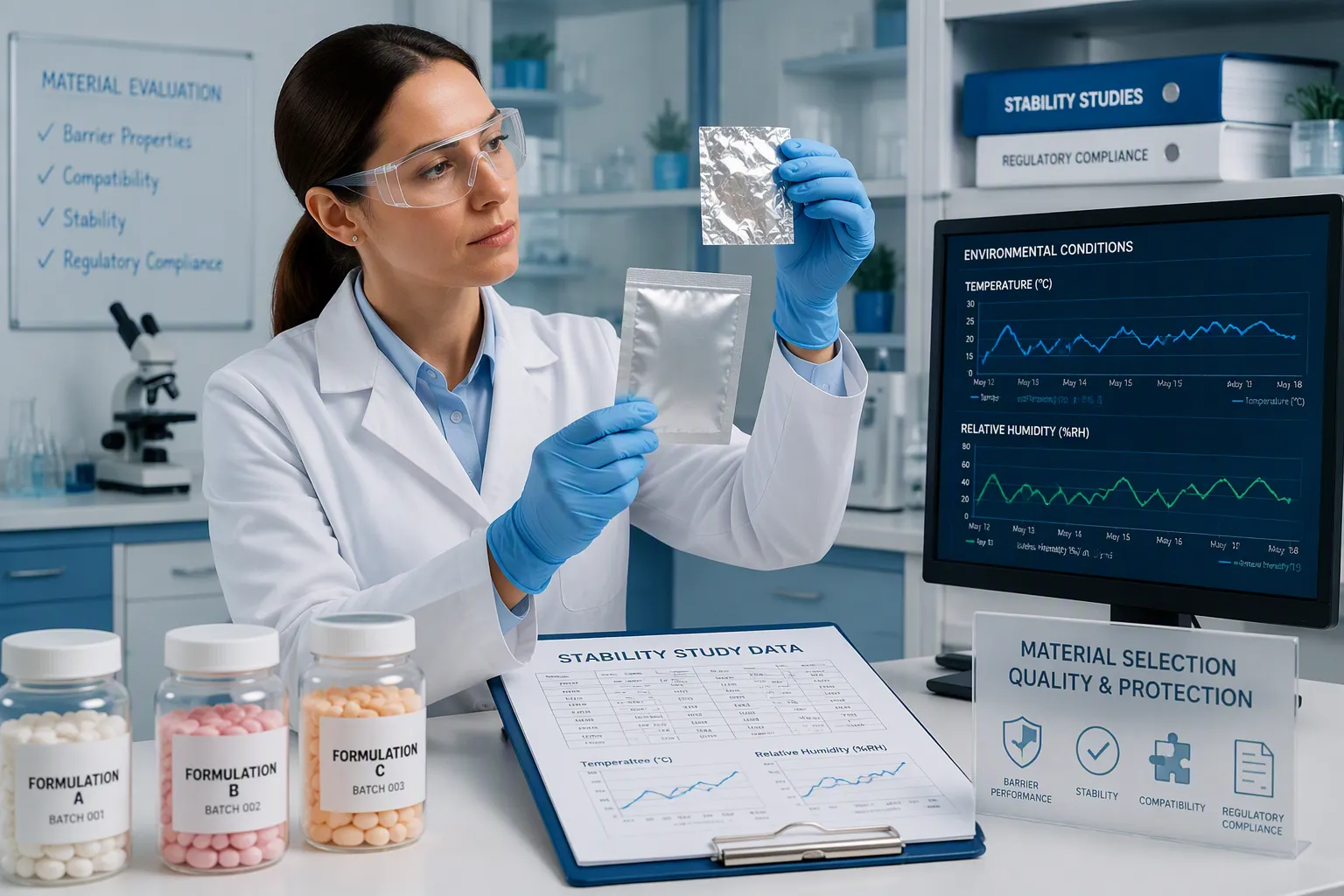
Conducting Stability Studies
Stability studies form the base of your packaging choice. These studies test how your drug acts under different conditions. You expose samples to set temperature and humidity levels. You check strength, look, and chemical makeup over time. The data shows how fast your drug breaks down. It also shows which factors cause the most harm.
Run these studies early in your packaging work. The results tell you the least barrier your foil must give. For example, a drug that soaks up water needs a nearly perfect moisture shield. A steady vitamin tablet may need much less protection. Your stability data removes guesswork from the process.
Matching Foil Barrier to Drug Properties
Once you know your drug's sensitivity, you match it to the right foil barrier. Standard press through packaging works well for stable formulas. These drugs handle small moisture exposure without losing strength. You save money by picking this low-cost option.
Very sensitive drugs need stronger protection. You might need a thicker aluminum core or extra barrier coatings. Your stability data guides this choice. You pick the least barrier that keeps your drug stable through its shelf life. This way balances protection with cost. You avoid paying too much for unneeded barrier strength while keeping your drug safe and working.
Regulatory Compliance and Certifications
Pharma packaging faces strict rules. You must meet regulatory needs at every step. Your foil supplier must show they follow known standards. This keeps patients safe and protects your company from legal issues.
USP <671> and ISO 15378 Standards
Two key standards guide pharma packaging materials. USP <671> Container Performance Testing applies to plastic packaging systems. This standard includes permeation testing to find moisture vapor transmission rate. It makes sure your packaging blocks moisture for solid and liquid oral medicines.
USP <671> Container Performance Testing for Pharmaceutical Packaging includes permeation testing to determine moisture vapor transmission rate (MVTR) for plastic packaging systems, ensuring protection against moisture for solid and liquid oral dosage forms.
ISO 15378:2017 lists rules for quality management systems in primary packaging production. This standard adds GMP needs, risk management, and traceability. It applies to vials, stoppers, seals, and other primary packaging parts. A supplier with ISO 15378 certification shows steady quality and safety in pharma use.
Child-Resistant and Senior-Friendly Options
Your packaging must balance safety with ease of use. Child-resistant features stop young kids from taking medicine by accident. Senior-friendly designs let older patients open their medicine easily. These needs sometimes clash. You need packaging that blocks children but stays easy for adults.
Your foil supplier should offer options that meet both needs. Push-through force can be set to resist small children while staying easy for adults. You may also add printed guides that show correct opening steps. These features support patient safety and labeling rules.
Partnering with a Trusted Manufacturer
Your foil supplier becomes your partner in drug stability. You need a maker with proven skills and strong quality systems. The right partner helps you handle complex needs and avoid costly errors.
Evaluating Supplier Certifications
Start by checking the supplier's written certifications. Look for Pharmaceutical GMP Certification from known groups. This proves they follow packaging production rules. ISO 9001 certification shows a basic quality management system. FDA Drug Master File numbers show the supplier has shared product details with the FDA for US market entry. Product compliance certificates confirm they meet pharmacopeial standards like USP, EP, and YBB.
Sunkey Packaging holds ISO 9001, BRC, SGS, FDA, FSSC 22000, and GRS certifications. These credentials build a strong compliance base. You should check each certification's scope and end date. Ask for test reports that show the foil meets your exact needs.
Beyond papers, do hands-on checks at the site. Look at roll ends for neatness and surfaces for stains or streaks. Crumple a foil sample in your hand. Good foil feels stiff and makes a crisp sound. Check print quality for clear marks and even protective lacquer. Do a quick peel test with PVC to judge seal strength consistency.
Customization and Printing Capabilities
Your packaging must carry key information. Drug names, dose guides, and brand logos appear on the foil surface. High-precision printing reaches 175-200 LPI resolution with smallest font sizes of 0.8pt. Color difference stays within ΔE≤1.0 through closed-loop color control. This precision keeps your labels clear and professional.
Anti-counterfeiting features guard your product from tampering. Three-tier security options include microtext printing at 0.1mm, thermochromic ink that shifts color at 30°C, and holograms checked via smartphone app. These features boost brand recognition and patient safety.
Sunkey Packaging offers rotogravure, flexographic, and digital printing methods. You can choose up to 10 Pantone colors plus holographic effects. Advanced drying systems ensure zero solvent left behind, meeting FDA safety rules. Closed-loop servo tension control stops foil tearing during printing of thin 20-30 micron foils.
A good selection method has four steps. First, do a risk check to define your drug's protection needs. Second, test the foil with your forming film and equipment as one unit. Third, build ties with suppliers who show strong technical skills. Fourth, keep checking and improving based on production data. This step-by-step method ensures your ptp aluminum foil works well in pharma blister packaging.
PTP aluminum foil stands as the backbone of pharmaceutical blister packaging. Its unmatched barrier performance keeps your drugs stable and patients safe. Choosing the right manufacturer matters. Sunkey Packaging brings 22+ years of expertise, certifications like ISO 9001 and FDA, and advanced PET/AL/PET technology to every roll they produce.
The industry continues evolving. Emerging trends point toward exciting developments:
Emerging Trend
Key Feature
Nanocoatings
Improved moisture and oxygen resistance
Eco-Friendly Coatings
Biodegradable and recyclable materials
Smart Packaging
Sensors for real-time freshness monitoring
Laser Printing
High-resolution branding and traceability
These innovations will redefine press through packaging capabilities. Evaluate your current packaging needs today. Partner with a proven supplier who can grow with you.
FAQ
What does PTP stand for in pharmaceutical packaging?
PTP means Press-Through Packaging. This system uses a plastic sheet with small pockets that hold single doses. A thin aluminum foil seals the flat side. You press the pocket, and the tablet pushes through the foil for easy use.
How does PTP aluminum foil protect medication?
The aluminum core blocks moisture, oxygen, and light fully. Its water vapor transmission rate stays under 0.5 g/m²·24h. The oxygen transmission rate is almost zero. This barrier keeps drugs stable and makes them last longer, even in hot, wet places.
What layers make up PTP aluminum foil?
PTP foil has three layers. The aluminum core gives the main barrier. An outer coating holds printed drug info and resists wear. An inner heat-seal coating bonds the foil to the plastic blister pocket during making.
What is the difference between PTP foil and cold-form foil?
Standard PTP foil seals plastic blisters and costs less. Cold-form foil, or Alu-Alu, uses aluminum for both the pocket and the lid. It gives full barrier protection but costs more and makes bigger packages. Pick based on your drug's sensitivity.
How do you select the right PTP foil for your product?
Start with stability tests to learn your drug's sensitivity. Match the foil barrier to those needs. Check that your supplier has certifications like ISO 15378 and FDA compliance. Test samples with your forming film and tools before ordering full production.
Can PTP foil include custom printing?
Yes. Makers use high-precision printing on the outer layer. You can show drug names, brand logos, dose instructions, and anti-counterfeit marks. This printing helps people know their medicine and raises brand recognition.
What regulatory requirements apply to PTP foil manufacturers?
Suppliers must follow ISO 15378 rules for primary packaging materials. Many also have FDA certifications and GMP compliance. These certifications ensure steady quality, traceability, and safety. Always check a supplier's credentials and ask for test reports before working with them.
Why does puncture resistance matter in PTP foil?
Puncture resistance stops accidental tears during shipping and handling. Sunkey's PTP foil has at least 3.5 N, which cuts breakage by 90%. Yet the foil still breaks cleanly when you press a dose through. This balance keeps medicine safe until you need it.
Select your packaging needs by filtering through our comprehensive categories. If you don't find what you're looking for, feel free to contact us for custom solutions.