You see many kinds of pet food packaging material in stores today. The most common types are:
Plastic
Aluminum
Paper and cardboard
Biodegradable plastics
The pet food packaging material you choose can impact safety, freshness, and environmental friendliness. Flexible plastic material keeps food safe from moisture and heat. Many pet owners prefer packaging material that is eco-friendly and reduces waste. The pet food industry generates over 300 million pounds of plastic waste annually. Brands like Sunkey use durable pet food packaging material that protects food quality while supporting sustainability.
Statistic | Description |
73% | Pet owners want packaging material that keeps food fresh |
116 million tons | Greenhouse gases from the pet food industry each year |
Key Takeaways
Pick packaging materials that keep pet food fresh and safe. These materials also stop moisture and air from getting in. Plastic, aluminum, and paper are used a lot for pet food packaging. Some packaging uses biodegradable plastics. These help cut down on waste and protect nature. Find packages with resealable zippers and easy-tear openings. These features make feeding your pet simple. Strong packaging keeps germs and dirt away from your pet's food. Aluminum foil and tinplate cans are great for keeping wet food fresh. Multi-layer films give strong protection and keep food good. Always look for safety certifications on the packaging. This makes sure your pet’s food is safe.
Overview of Pet Food Packaging Materials
Main Material Types
There are a few main types of pet food packaging. Each one has its own benefits for different foods. The table below shows the most common materials and how people use them:
Material Type | Description & Usage |
Paper-Based Packaging | Kraft paper bags are good for dry pet food. They are strong, easy to print on, and look eco-friendly. |
Aluminum Foil and Metallized Layers | These layers stop oxygen, water, and light. You see them in dry kibble, wet food pouches, and treats that last a long time. |
Multi-Layer Composite Packaging | This type uses layers like PET or kraft paper outside, EVOH or aluminum foil in the middle, and PE inside. These layers make the package strong and safe. |
Biodegradable and Compostable Packaging | Newer choices like PLA and compostable laminates are for people who care about the environment. |
Tinplate and Metal Cans | These are used most for wet pet food. They keep food fresh and protect foods with lots of moisture. |
Plastics
Plastics are used a lot in pet food packaging. You find them in pouches, bags, and trays. Plastics like polyethylene, polypropylene, and PET keep food safe from water and air. Sunkey Packaging uses special plastics for strong bags and pouches. These materials help keep your pet’s food fresh and safe.
Paper
Paper packaging, like kraft paper and paperboard, is good for dry pet food. You can print bright colors on paper to make it look nice. Paper is also a good choice for people who want eco-friendly packaging.
Aluminum Foil
Aluminum foil gives strong protection from oxygen, water, and light. You find it in pouches for wet food and treats that need to last a long time. Aluminum foil helps keep food safe and tasty.
Tinplate
Tinplate and metal cans are best for wet pet food. They close tightly and keep out germs and air. This helps your pet’s food stay fresh for a long time.
Flexible Films
Flexible films use many layers of materials. These films are strong, protect food, and are easy to open. Sunkey Packaging makes flexible films for both wet and dry pet food. Some have zippers you can reseal or easy-tear openings.
Why Material Choice Matters
It is important to pick the right packaging for pet food. The right material keeps food safe, fresh, and looking good. Here are some reasons why picking the right material matters:
Good packaging keeps food fresh and healthy for your pet.
Strong packages keep out dirt and germs. This helps stop sickness from food.
Packaging must follow FDA rules. Safe materials do not mix with the food.
The study showed that a 15-mer AMP can stick to PET surfaces. This makes strong antimicrobial packaging. It helps keep fresh food safe by stopping bad germs from growing.
Research shows that keeping barrier properties the same in trays is important. This stops oxygen and water from getting in, which can spoil protein-rich foods.
A tight, leak-proof seal is very important for keeping food fresh longer. Even small holes or weak spots can let air in and cause food to lose nutrients or get germs.
Thermoforming makes sure trays are shaped the same way every time. This is important for wet and semi-liquid foods that need strong trays during filling and sealing.
When you pick the right pet food packaging, your product lasts longer and stays safe. You also help the planet by choosing eco-friendly options. Sunkey Packaging can help you find the best packaging for your needs.
Plastics in Pet Food Packaging
Common Plastic Types
Plastics play a huge role in pet food packaging. You see them in almost every store. The plastic segment in pet food packaging is expected to reach $7.37 billion by 2026. This makes up about 57.61% of the market. Plastics are popular because they are strong and keep out air, dust, and moisture. They help keep your pet’s food fresh and safe. Many companies now use bio-based plastics like bio-based PE, PP, and PET. These new materials help the environment and support market growth.
Polyethylene (PE)
Polyethylene, or PE, is one of the most common plastics. You find it in bags and pouches for dry pet food. PE is flexible and tough. It keeps out moisture and helps food last longer. Sunkey Packaging uses high-quality PE in many of its products.
Polypropylene (PP)
Polypropylene, or PP, is another popular choice. PP is strong and resists heat. You often see it in packaging for snacks and treats. PP works well for resealable bags. It also helps keep food safe from moisture and air.
PET and Nylon
PET stands for polyethylene terephthalate. It is clear and strong. PET is great for keeping out oxygen. Nylon is also used in some pet food packaging. It adds extra strength and helps block air and moisture. These materials work well together in multi-layer packaging.
Protective Qualities
Plastics protect pet food from things that can spoil it. Each type of plastic has different barrier properties. The table below shows how well each plastic blocks oxygen and moisture:
Property/Polymer | LDPE | PET | PLA | PP | PS |
Oxygen barrier (permeation at 30 °C [*10−10 cm3(STP)·cm/cm2·S·cm Hg]) | 6.9 | 0.04 | 3.3 | 1.5 | 2.6 |
Moisture vapor transmission rate (g-mil/10in.2/24 h) | 1.0–1.5 | 2 | 18–22 | 0.5 | 10 |
Water absorbance (%) | 0.005–0.015 | 0.1–0.2 | 3.1 | 0.01–0.1 | 0.01–0.4 |
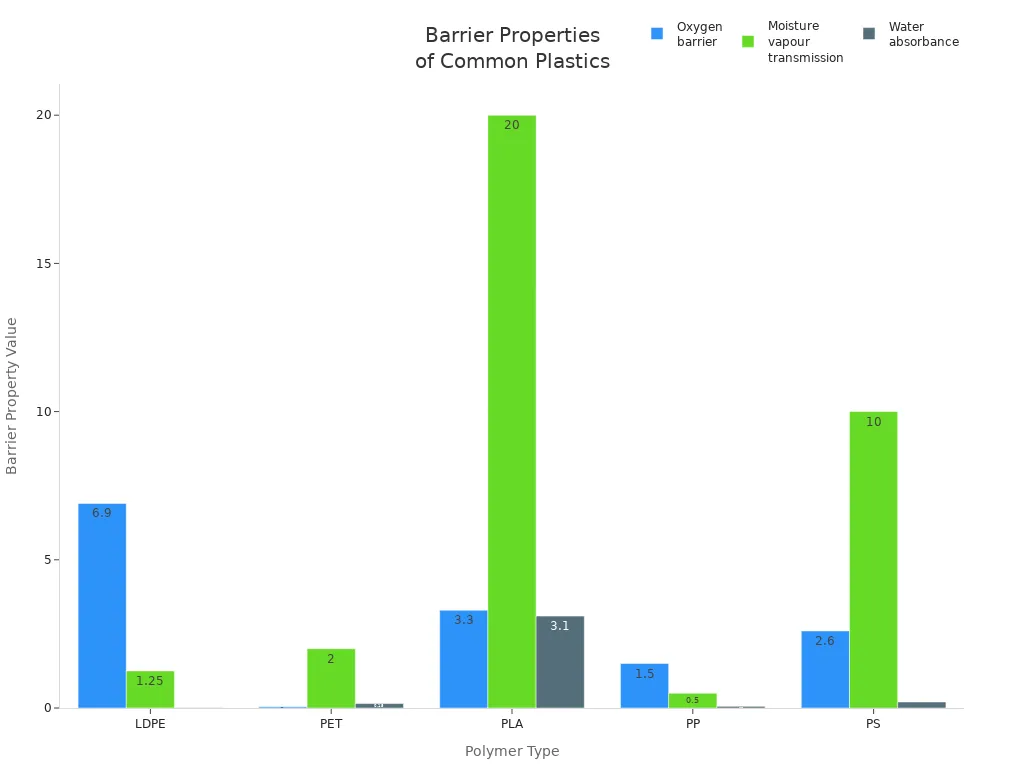
You can see that PET has a very strong oxygen barrier. PP is good at blocking moisture. PE is flexible and keeps out water. These qualities help keep pet food fresh and safe.
Uses for Wet and Dry Food
You will find different plastics used for wet and dry pet food. The table below shows how packaging changes based on the type of food:
Dimension | Wet Food (Cans/Aluminum Pouches) | Dry Food (Bags/Cartons) |
Common Packaging Types | Packaged in metal cans, high-barrier aluminum pouches, or flexible soft packaging for excellent sealing and protection. | Packaged in plastic composite bags, resealable zipper bags, or multi-layered cartons, which are lightweight and durable. |
Storage Conditions | Requires airtight sealing and refrigeration after opening. | Can be stored at room temperature with a longer shelf life. |
Packaging Costs | Higher costs due to sterilization and advanced production requirements. | Lower costs due to the use of plastic composite or paper bags. |
Freshness Maintenance | Excellent airtightness; freshness depends on cold storage after opening. | Resealable packaging preserves freshness after opening. |
You often see plastic packaging with features like resealable zippers and easy-tear openings. These features make it easy for you to use and store pet food. Sunkey Packaging offers many options that help keep food fresh and safe for your pets.
Tip: When you choose the right pet food packaging material, you help keep your pet’s food fresh and tasty. You also make feeding time easier for yourself.
Pros and Cons
Plastics have many good things for pet food packaging. They keep food fresh and safe. Plastics are also easy to use. But there are some problems, especially for the environment. Knowing the good and bad sides helps you pick better for your pet and the Earth.
Here is a table that lists the main good and bad things about different plastics used in pet food packaging material:
Type of Plastic | Advantages | Disadvantages |
PET (Polyethylene Terephthalate) | Cost-effective, excellent barrier properties, recyclable (in some regions) | Environmental concerns due to plastic waste |
HDPE (High-density Polyethylene) | Strong and impact-resistant | Limited recyclability in some areas |
LDPE (Low-density Polyethylene) | Airtight, keeps food fresh | Not widely recyclable |
PP (Polypropylene) | Durable and heat-resistant | Environmental impact of disposal |
PLA (Polylactic Acid) | Biodegradable, reduces waste | May not be suitable for all packaging needs |
PBAT (Polybutylene Adipate Terephthalate) | Compostable, flexible | Limited availability and higher cost |
Cellulose-Based Plastics | Made from renewable resources | Performance may vary compared to traditional plastics |
Plastics block water and air very well. This helps pet food stay fresh longer. PET and PP are great at stopping spoilage. These materials keep the food’s nutrients inside.
Some packages have resealable zippers and easy tear spots. Resealable zippers let you open and close the bag many times. This keeps the food fresh after each use. Easy tear spots help you open the bag without scissors. These features make feeding your pet simple. You can store the food safely between feedings.
Some plastics can be recycled or break down in nature. PLA and PBAT help cut down on trash. Cellulose-based plastics come from plants, which is better for the planet. You can pick these if you want to help the environment.
But not all plastics are easy to recycle. LDPE is not always accepted in recycling bins. If plastic waste is not handled right, it can hurt nature. You should think about how you will throw away the packaging.
Tip: Try to find pet food packaging with resealable zippers and easy tear spots. These features help keep food fresh and make feeding your pet easier.
There are many kinds of plastic pet food packaging. Each kind has good and bad points. When you know these, you can choose what works best for you and your pet.
Paper and Cardboard Packaging
Types of Paper Packaging
Paper and cardboard are used a lot for pet food. These materials help brands make eco-friendly packages for dry pet food. There are two main types: kraft paper and paperboard.
Kraft Paper
Kraft paper is strong and looks natural. You see it in bags for dry pet food. This material is light and breaks down in nature. Many brands like kraft paper because it prints well and feels good for the planet. Sometimes, companies add a lining inside to keep out moisture.
Paperboard
Paperboard is thicker than kraft paper. You find it in boxes for big amounts or multipacks. Paperboard is sturdy and keeps food safe during shipping. Some boxes have liners inside to block water and bugs. This helps keep pet food fresh and safe.
Here is a table that shows the most common paper and cardboard types for pet food:
Packaging Type | Material Type | Common Use in Pet Food Packaging | Key Features and Benefits |
Paper Bags | Paper | Dry pet foods like kibble | Lightweight, biodegradable, often with protective inner lining |
Cardboard Boxes | Cardboard | Larger quantities of dry food or multipacks | Stable, recyclable, sometimes with inner liners for moisture/pest protection |
Applications for Dry Food
Paper and cardboard are mostly used for dry pet food. They work well for kibble and treats. Brands use them for small bags or big boxes. The packaging must stop oils and fats from leaking out. This keeps the package strong. The outside should look clean and nice.
Requirement | Description |
Strong barrier properties | Packaging must resist oils and fats to prevent grease penetration, which can compromise integrity. |
Food safety | The materials used must ensure that the food remains safe for consumption. |
Aesthetic appeal | The outer layer should be visually appealing and free from stains caused by grease. |
Tip: If you pick paper or cardboard packaging, look for inner liners or coatings. These help keep food fresh and stop it from going bad.
Benefits and Drawbacks
Paper and cardboard have many good things for pet food packaging. They are good for the environment because they break down and can be recycled. Paper and cardboard break down fast when there is air. You can recycle them more than once.
Paper and cardboard break down and can be recycled, which is good for the planet.
Paper can only be recycled a few times before it gets weak and needs help to stay strong.
Most paper packaging needs coatings to stop food from spoiling and losing smell; these coatings might let chemicals get into the food.
Some coatings stop paper from being recycled again.
Cardboard is stronger than paper and can be recycled more, but it often needs plastic liners or coatings, which might have bad chemicals like BPA and phthalates.
Cardboard that is coated or greasy cannot be recycled, so it is not as good for the environment.
There are also some problems. Paper does not block air, light, or germs very well. This means food does not last as long as it does in plastic. To fix this, companies add plastic layers. These layers can make recycling harder. Paper and cardboard take up more space in landfills than plastic. They are a big part of trash in the U.S.
Paper does not block air, light, or germs well, so food does not last as long as in plastic.
To make paper better, companies add plastic layers, but this makes recycling harder.
Even though you can recycle paper and cardboard, they still fill up landfills, making up 11.8% of U.S. trash in 2018.
Paper breaks down fast when there is air, but it breaks down slowly in landfills where there is not much air.
Paper takes up more space in landfills than plastic because it is less dense.
You can pick paper and cardboard for dry pet food if you want to help the planet. Make sure you check for liners and coatings that keep food safe and help with recycling.
Aluminum Foil and Tinplate
Aluminum Foil Properties
Aluminum foil is used in many pet food packages. It protects food from things that can spoil it. Aluminum foil is a strong barrier. It keeps out oxygen, water vapor, UV light, and visible light. This stops food from going bad and keeps it fresh longer. Aluminum foil also keeps smells inside the package. This is important because you want the aroma to stay until you open it. The laminate structure of aluminum foil stops moisture from getting in. This helps keep the texture and taste of pet food just right.
Aluminum foil blocks oxygen, water vapor, UV light, and visible light.
It keeps smells inside the package while stored.
The laminate structure stops moisture from entering.
Aluminum foil helps keep food fresh and tasting good.
Tinplate Cans
Tinplate cans are used for wet pet food. These cans protect food and keep it safe. Different coatings are used inside the cans for different foods. Foods with lots of sulfur, like meats or peas, need a special coating. This coating stops black stains from forming. Acidic foods, like tomatoes or pickles, need acid-resistant coatings. These coatings stop the can from rusting and keep metal out of the food. Low-acid foods, like oils or dry powders, use standard coatings. Tinplate cans use these coatings to keep food safe.
Food Product Type | Recommended Material | Recommended Coating | Rationale |
High Sulfur (e.g., Corn, Peas, Meats) | Tinplate | Sulfur-resistant lacquer | Stops black stains from iron sulfide |
Highly Acidic (e.g., Tomatoes, Pickles) | Tinplate or TFS | Acid-resistant polymer | Stops rust and metal from getting in food |
Low Acid/Non-Corrosive (e.g., Oils, Dry Powders) | TFS or Aluminum | Standard epoxy-phenolic | Less protection needed for these foods |
Manufacturers use careful steps to make these cans. They check materials, watch production, and test for leaks. These steps make sure cans protect pet food and keep it safe.
Food Safety and Shelf Life
You want your pet’s food to stay fresh and safe. Aluminum foil and tinplate cans help with this. The can maker makes a strong container. The food packer fills, seals, and processes the food to keep it sterile. If any step fails, food can spoil or get germs. This teamwork is important for food safety.
Aluminum foil keeps out air and moisture. Tinplate cans seal tightly and protect food from germs. These materials help pet food last longer on the shelf. You can trust your pet’s food stays fresh until you open it. When you pick packaging with aluminum foil or tinplate, you help keep your pet safe and healthy.
Tip: Always check for tight seals and no damage on packaging. This helps keep pet food safe and fresh.
Pros and Cons
When you pick packaging for pet food, you should know the good and bad parts of each material. Aluminum foil and tinplate have their own benefits and problems. Learning about these helps you choose what works best for you.
Here is a table that shows how aluminum and tinplate containers are different:
Feature | Aluminum Containers | Tinplate Containers |
Weight | Lightweight, lowers shipping costs | Strong and tough, but heavier, raises shipping costs |
Strength | Medium strength, bends easily | Very strong, keeps shape, but not as bendable |
Corrosion | Stops rust naturally | Tin layer stops rust, but can wear out |
Printability | Good for simple prints | Great for detailed prints, needs prep for some designs |
Food Safety | Natural layer keeps food safe | Safe with coatings for sour foods, needs coating |
Recyclability | Easy to recycle, accepted worldwide | Recyclable and magnetic, but less recycling than aluminum |
Cost | Saves money on shipping | Cheap at first, but heavy weight costs more to ship |
Aluminum Packaging:
Aluminum is light, so shipping is easier and cheaper.
It stops rust and keeps food safe from water and air.
You can recycle aluminum almost anywhere, which helps the planet.
Aluminum makes a natural layer that protects food.
It works for wet and dry pet food.
Sometimes, aluminum reacts with sour foods, so it needs special coatings.
Making aluminum uses lots of energy, which can hurt the planet.
Tinplate Packaging:
Tinplate is strong and keeps its shape well.
It blocks light, air, and water to protect food.
The tin layer stops rust, but it can wear off.
You can print cool designs on tinplate to make your product stand out.
Tinplate is heavier than aluminum, so shipping costs more.
You need special coatings inside for sour foods to keep them safe.
Tinplate can be recycled and is magnetic, but not as much as aluminum.
Tip: If you want packaging that is easy to recycle and light to ship, aluminum is a smart choice. If you need something strong for heavy or wet foods, tinplate cans are a good option.
Both aluminum and tinplate keep pet food fresh and safe. You can pick the one that fits your product and your goals for saving money and helping the planet.
Flexible Films in Pet Food Packaging
Multi-Layer Films
Many pet food packages use multi-layer films. These films have several layers made from different materials. Each layer does something special. The inside layer touches the food and keeps it safe from bad chemicals. The middle layers make the package strong and block air, water, and smells. The outside layer protects the package and makes it look nice.
Multi-layer films keep pet food fresh by blocking gas and water.
They stop germs from spoiling the food and keep the taste and smell inside.
These films also help the package stay strong during shipping and in stores.
You can find these films in bags for dry treats, pouches for wet food, and small packs of kibble. They help your pet’s food stay safe and tasty until you open it.
High-Barrier Materials (EVOH, etc.)
Flexible films need to block air and water very well. Materials like EVOH are great at this job. EVOH keeps oxygen and moisture out. This helps pet food stay fresh for a long time. You do not need to use as many preservatives because the package protects the food.
Feature | Benefit |
Oxygen Barrier | Keeps pet food fresh and high quality |
Moisture Barrier | Stops spoilage and makes food last longer |
Flexibility | Works for many types of packaging |
Reduced Need for Preservatives | Keeps food good without extra chemicals |
EVOH and other strong materials keep nutrients and taste in the food. They also stop air and water from getting inside. This means your pet gets safe and tasty food.
Sunkey Packaging Innovations
Sunkey Packaging makes advanced flexible films for pet food. You can pick films that block moisture, fat, and smells. These films are strong and bend easily, so packing and storing food is simple.
These mono-material packaging solutions give strong protection from moisture, fat, and odor. They are strong and flexible for packing and storage.
Sunkey has pouches with zippers you can reseal and easy-tear spots. These features make feeding your pet easy and keep food fresh after you open it. You can find Sunkey’s films in treat bags, wet food packs, and kibble bags. The films are light, so you use less material and help the planet.
Flexible films are important in today’s pet food packaging. They keep food safe, make storage easy, and help your product look good in stores. When you use flexible films with strong barriers, your pet gets the best freshness and quality.
Eco-Friendly Packaging Materials
Biodegradable Films
More pet food packages now use biodegradable plastics. These materials break down in nature and help cut down on trash. Many companies use compostable plastics like PLA, PHA, and cellulose-based films. PLA is made from plants and breaks down fast in compost. PHA is good at blocking air and water, so it keeps food fresh. Cellulose-based films come from plants and are liked by people who care about the environment.
Biodegradable Film Type | Description/Notes | Market Adoption/Share |
PLA (Polylactic Acid) | Common biodegradable polymer used in packaging | Widely adopted due to compostability |
PHA (Polyhydroxyalkanoates) | Biodegradable polymer with good barrier properties | Increasing adoption with innovation |
Cellulose-based films | Derived from natural cellulose, compostable | Growing interest due to natural origin |
The market for these plastics is growing very fast. In 2023, it was worth $1.9 billion. Experts think it will reach $4.2 billion by 2028. About 70% of all biodegradable packaging is flexible. When you pick compostable plastics for pet food, you help the Earth.
Tip: Compostable plastics can break down at home or in special places. This helps cut down on landfill trash and supports the planet.
Mono-Materials and Recyclable Options
Mono-material packaging uses just one kind of plastic, like PE, PP, or PET. You can recycle these packages easily because they do not need to be taken apart. Mono-material designs remove mixed layers, so recycling is simple. This gives cleaner recycling and better results.
Feature | Traditional Composite Packaging | Mono Material Packaging |
Material Structure | Multi-layer (e.g., PET/AL/PE) | Single-material (e.g., all-PE) |
Recycling Process | Requires separation; complex and costly | Directly enters recycling stream |
Output Quality | Downcycled; lower value | High purity; suitable for reuse |
Circular Fit | Poor | Excellent (e.g., film-to-film) |
Mono-material packaging works well for recycling and the circular economy. You help the planet when you pick recyclable options. Many brands now use mono-materials to meet recycling goals and protect nature.
Mono-material designs use only one plastic for the whole package.
They get rid of mixed layers that make recycling hard.
Mono-material packaging gives cleaner recycling and better results.
Sunkey Packaging’s Sustainable Solutions
Sunkey Packaging has eco-friendly choices for pet food packaging. Their strong materials block moisture and stop mold. Good sealing keeps out bugs and mice, so your pet’s food stays safe. Vacuum packaging or nitrogen filling lowers oxygen, which keeps food fresh and full of nutrients.
Feature | Description |
Moisture Resistance | High-quality composite materials block external moisture, preventing dampness and mold. |
Pest Prevention | Strong sealing keeps pests and rodents out, avoiding contamination. |
Freshness Retention | Vacuum packaging or nitrogen filling reduces oxygen contact, extending shelf life and retaining nutrients. |
Sunkey Packaging follows strict rules to protect the environment. You might see labels like Forest Stewardship Council (FSC), Cradle to Cradle Certified, Green Seal, and EU Ecolabel. These show Sunkey cares about the planet and uses safe materials.
Certification Name | Description |
Forest Stewardship Council (FSC) | Certifies that packaging materials are ethically sourced from responsibly managed forests. |
Cradle to Cradle Certified® | Evaluates the environmental impact of packaging materials throughout their entire lifecycle. |
Green Seal | Ensures that food packaging materials are sustainable and that the manufacturer conserves resources. |
EU Ecolabel | Awarded to products that meet high environmental standards throughout their lifecycles. |
When you choose eco-friendly pet food packaging, you help the planet. Sunkey Packaging helps you keep your pet’s food safe and protect nature with green solutions.
Wet vs. Dry Pet Food Packaging
Material Choices for Wet Food
Wet pet food needs strong packaging. Wet foods have lots of water. They need materials that block water, air, and germs. Most companies use packages with many layers. These layers work together to keep food safe.
Here is a table that lists common materials for wet pet food packaging:
Material Type | Description |
PET/FOIL/RCPP | Maintains food quality |
PET/NY/RCPP | Helps in preventing moisture and deterioration |
PET/AL/NY/RCPP | Protects against pollution and ensures safety |
These materials stop water and air from getting in. They also keep out pollution and bad things. Food-grade materials make sure pets do not eat anything unsafe. You can trust these packages to keep wet food fresh.
Food-grade materials stop moisture and spoilage.
They block pollution from getting in.
They keep pets safe from eating harmful things.
Material Choices for Dry Food
Dry pet food uses different packaging. Dry foods must stay crisp and dry. You often see plastic, kraft paper, and aluminum foil used.
Here is a table that shows the most common materials and their advantages:
Material Type | Advantages |
Plastic (PET, HDPE, LDPE, PP) | Lightweight, strong, blocks moisture, recyclable, keeps food fresh. |
Kraft Paper | Breaks down in nature, can be recycled, strong, good for eco-friendly buyers. |
Aluminum Foil | Blocks air, water, and light, keeps flavor, makes food last longer. |
Most dry pet food uses multi-layer packaging. The outside layer is strong. The middle layer blocks air and water. The inside layer is safe for food. This design keeps dry food fresh for a long time.
Kraft paper is liked because it is strong and looks natural.
Aluminum foil gives the best block against air and water.
Plastic keeps food fresh and is easy to recycle in many places.
Impact on Food Safety and Freshness
The packaging you pick affects food safety and freshness. Good packaging blocks water, air, and germs. This helps keep taste, smell, and nutrients. High-barrier packaging makes food last longer and cuts down on waste. Your pet’s food stays fresh for more days.
Resealable zippers help keep dry pet food fresh after opening. Wet pet food packaging uses tight seals to keep in water and flavor. Both types protect food from going bad or getting dirty.
Tip: Always look for strong seals and resealable parts. These help keep your pet’s food safe and fresh.
When you choose the right packaging, you protect your pet. You also help stop food waste by keeping food fresh longer.
Cost and User Experience
You want pet food packaging that does not cost too much. It should also make feeding your pet simple. The material you pick changes the price and how you use it. Flexible packaging, like pouches and bags, is usually cheaper to make and ship. These packages are light and small, so companies save money on shipping. You might pay less for pet food because of these savings.
Many brands pick flexible packaging because it is strong and easy to use. You can open and close these packages without trouble. Some have zippers you press to close or spouts that pour food easily. You do not need scissors or other tools. These features help you feed your pet quickly and keep things clean.
Eco-friendly materials, like biodegradable films and recyclable mono-materials, can cost a little more at first. You pay extra to help the planet. Many pet owners like picking packaging that is good for the Earth. Companies see this and make more green choices. You can find packaging that is safe for pets and better for nature.
Here is a table that shows how different packaging materials change cost and user experience:
Packaging Material | Cost Impact | User Experience Features |
Flexible Films | Lower production and shipping costs | Easy-open, resealable zippers, lightweight |
Paper/Kraft | Moderate cost, eco-friendly | Simple opening, natural look |
Aluminum Foil | Higher cost, strong protection | Keeps food fresh, blocks light and air |
Tinplate Cans | Higher cost, strong and durable | Requires can opener, long shelf life |
Biodegradable Films | Slightly higher cost | Compostable, aligns with eco values |
Flexible packaging is very handy for pet owners. You can close the bag again to keep food fresh. You do not waste food because you can pour just what you need. Aluminum foil and tinplate cans keep food safe, but you might need a tool to open them.
Tip: Try to find packaging with zippers you can close again and spouts that pour easily. These features help you keep food fresh and make feeding your pet simple.
People who care about the Earth often pick packaging that can be recycled or composted. You help nature by choosing these materials. Brands like Sunkey Packaging make new types of packaging that save money and are easy to use. You get good packaging that fits what you want and believe in.
You can see that packaging material changes both the price and how you use pet food. If you pick the right packaging, you save money and make feeding your pet easier. You also help keep the planet clean.
You can pick from lots of pet food packaging. Every material has its own good points for safety, freshness, and the planet. Sunkey Packaging has new and earth-friendly choices. When you choose packaging, think about what your product needs. Also, think about how your choice helps or hurts the environment.
Tip: Good packaging keeps your pet’s food safe and fresh. It also helps protect the planet.
FAQ
What is the safest material for pet food packaging?
High-barrier plastics, aluminum foil, and tinplate are very safe. These materials stop air, water, and germs from getting in. They help keep your pet’s food fresh and safe to eat.
Can you recycle pet food packaging?
You can recycle many packages made from one type of plastic, paper, or aluminum. Always look for the recycling symbol on the package before recycling. Some packages with mixed materials are harder to recycle.
Why do some pet food bags have zippers?
Zippers let you open and close the bag again and again. This keeps the food fresh each time you use it. You do not need any special tools to open or close the bag.
Are biodegradable pet food packages good for the environment?
Yes! Biodegradable films break down in nature over time. When you pick these packages, you help cut down on trash. Look for words like "compostable" or "biodegradable" on the label.
What makes Sunkey Packaging different?
Sunkey Packaging uses special materials that block water and air. Their packages have zippers you can reseal and easy-tear spots. They also offer eco-friendly choices. Sunkey cares about safety, freshness, and helping the planet.
How do I know if my pet food packaging is food-safe?
Check for food-grade symbols or safety certifications on the package. These show the material is safe for food. You can also ask the company for more information.
Which packaging is best for wet pet food?
Aluminum foil pouches and tinplate cans are best for wet food. These packages seal tightly and keep out germs. They help wet food stay fresh for a longer time.
Does packaging affect the taste of pet food?
Yes. Good packaging keeps out air, water, and light. This helps keep the taste, smell, and nutrients inside. Your pet gets fresher and tastier food.


