Quick Answer: A stand up pouch (also called doypack) is a flexible packaging bag with a bottom gusset that allows it to stand upright on retail shelves. It combines the convenience of flexible packaging with excellent shelf presence, making it one of the most popular packaging formats for food, pet food, and consumer products worldwide.
If you're a brand owner, product developer, or procurement manager looking to understand stand up pouches for your packaging needs, this comprehensive guide covers everything you need to know—from basic structure to material options, applications, and how to choose the right supplier.
What Exactly is a Stand Up Pouch?
A stand up pouch is a type of flexible packaging that features a bottom gusset—a folded section at the base that expands when filled, creating a stable, flat bottom. This design allows the pouch to stand upright on store shelves without external support, similar to rigid containers but at a fraction of the weight and cost.
The term "doypack" comes from the French company Doyen, which patented this design in 1963. Today, "stand up pouch" and "doypack" are used interchangeably in the packaging industry.
Stand Up Pouch Structure Diagram
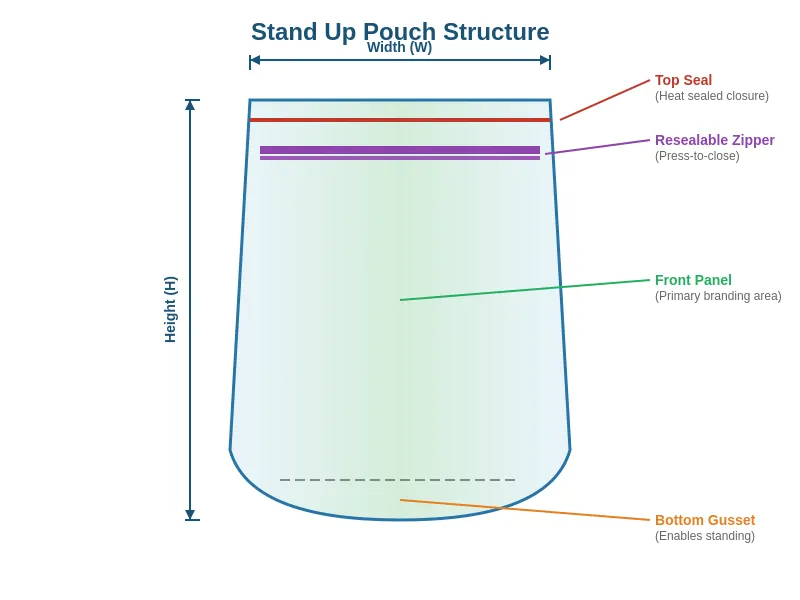
Key Structural Components
• Front Panel: Primary branding surface for product information and graphics
• Back Panel: Secondary surface for nutrition facts, instructions, and barcodes
• Bottom Gusset: The folded base that enables the pouch to stand upright
• Top Seal: Heat-sealed closure, often with tear notch for easy opening
• Optional Features: Zipper, spout, hang hole, valve, or window
Why Choose Stand Up Pouches? 7 Key Benefits

1. Superior Shelf Presence
Stand up pouches display products prominently at eye level, offering 360° branding opportunity. Studies show that products in stand up pouches can achieve up to 30% higher visibility compared to traditional lay-flat bags.
2. Lightweight & Cost-Effective
Compared to rigid containers (glass jars, plastic bottles, metal cans), stand up pouches are 75-90% lighter. This translates to significant savings in shipping costs and reduced carbon footprint.
3. Excellent Barrier Protection
Multi-layer laminate structures can provide outstanding barriers against oxygen, moisture, light, and aroma—extending product shelf life from weeks to months or even years.
4. Consumer Convenience
Features like resealable zippers, easy-pour spouts, and tear notches make stand up pouches highly user-friendly. Consumers can open, use, and reseal products with minimal effort.
5. Versatile Applications
From coffee and snacks to pet food and laundry detergent, stand up pouches work across virtually every product category. They can hold solids, liquids, powders, and granules.
6. Sustainable Options Available
Modern mono-material (mono-PE, mono-PP) stand up pouches are fully recyclable. Post-consumer recycled (PCR) content options are also becoming mainstream.
7. High-Quality Printing
Rotogravure and digital printing technologies enable photorealistic graphics, metallic effects, matte/gloss finishes, and vibrant colors that enhance brand appeal.
Stand Up Pouch Applications by Industry

Industry | Typical Products | Common Features |
Food & Beverage | Coffee, snacks, nuts, dried fruits, sauces | Zipper, valve, high barrier |
Pet Food | Dog food, cat food, treats, supplements | Heavy-duty zipper, puncture resistance |
Baby Products | Baby food puree, formula, snacks | Spout, squeezable material |
Health & Wellness | Protein powder, supplements, vitamins | Moisture barrier, resealable |
Household | Laundry pods, cleaning products | Child-resistant closure |
Stand Up Pouch Material Structures
Stand up pouches are typically made from multi-layer laminate films. Each layer serves a specific function:

1. Outer Layer (Print Layer): PET, BOPP, or Nylon—provides printability, gloss, and abrasion resistance
2. Middle Layer (Barrier Layer): Aluminum foil, EVOH, or metalized film—blocks oxygen, moisture, and light
3. Inner Layer (Sealant Layer): PE or CPP—enables heat sealing and provides food contact safety
Common Material Structures
• PET/PE: Basic structure for dry products
• PET/AL/PE: High barrier for coffee, tea, and sensitive products
• PET/VMPET/PE: Medium barrier with metallic appearance
• Kraft/PET/PE: Natural look for organic and eco-friendly positioning
• Mono-PE: Recyclable single-material structure
Frequently Asked Questions
Q: What is the difference between a stand up pouch and a doypack?
A: They are the same product. "Doypack" is the original trademarked name from the French inventor, while "stand up pouch" is the generic industry term commonly used in English-speaking markets.
Q: What is the minimum order quantity (MOQ) for custom stand up pouches?
A: At Sunkey Packaging, our standard MOQ is 10,000 pieces for custom printed stand up pouches. For new customers or market testing, we can accommodate trial orders starting from 5,000 pieces.
Q: How long does it take to produce custom stand up pouches?
A: Standard lead time is 15-20 business days after artwork approval. Rush orders can be completed in 10-12 days with advance arrangement.
Q: Are stand up pouches recyclable?
A: Traditional multi-layer pouches are difficult to recycle. However, mono-material (mono-PE or mono-PP) stand up pouches are fully recyclable in standard plastic recycling streams.
Q: Can stand up pouches be used for liquids?
A: Yes. Stand up pouches with spouts or fitments are widely used for liquid products like juices, sauces, and baby food purees.
Ready to Source Custom Stand Up Pouches?
Sunkey Packaging is a leading flexible packaging manufacturer with 15+ years of experience producing high-quality stand up pouches for global brands. We offer:
• FDA, BRC, and ISO certified production
• Custom sizes, materials, and printing
• Free samples for qualified inquiries
• Competitive pricing with MOQ from 5,000 pcs
Related Articles
•Flat Bottom Bags for Coffee Packaging
•Flat Bottom Bag vs Stand Up Pouch
•Flat Bottom Bag Materials Guide
•Flat Bottom Bag Size Guide
•Flat Bottom Bag Features & Add-ons
•How to Order Custom Flat Bottom Bags


